Checking heat-exposure protections
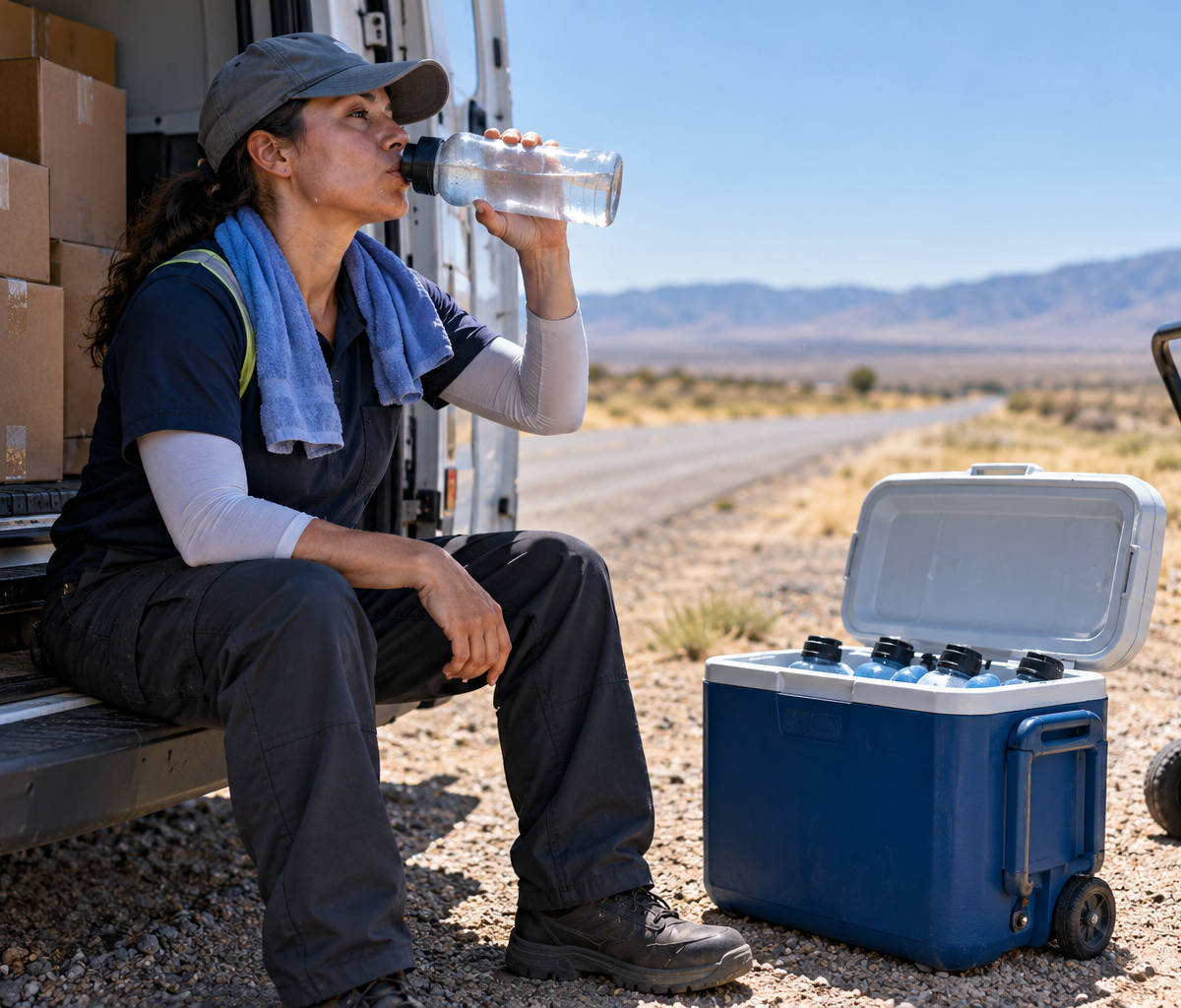
Assess practical water, cooling, route pacing and response arrangements for a hot delivery shift.
A summer delivery route can leave a driver far from a reliable water refill for hours. The van may feel cool between stops, yet each long walk and repeated parcel carry adds exertion in the sun. By afternoon, the water brought from the depot is nearly gone and the remaining route has little shade. Checking heat-exposure protections means learning where water comes from, how breaks and cooling work, and who can change the plan when heat exposure becomes unsafe. A hot-weather promise needs to hold on the actual route.
NIOSH recommends accessible cool drinking water, heat training, rest breaks, acclimatization planning, and procedures for symptoms and emergency response. OSHA's heat guidance emphasizes water, rest, and a cool place for breaks. Those are general prevention recommendations; they do not prove that Delpack provides a particular cooler, refill site, break schedule, or route adjustment. A candidate should ask how the employer applies them to drivers who work across changing locations rather than at one fixed outdoor station.
Confirm the drinking-water plan
The drinking-water plan should answer what a driver starts with and how they obtain more. Ask whether the operation supplies cool potable water, a refill point at the depot, containers that can be carried in the van, or an approved stop during the route. A case of bottles seen in the break room does not establish that enough water is available to someone who leaves for a long rural or suburban assignment. The plan needs to cover the full shift.
NIOSH recommends that employers provide adequate cool, potable water near the work area and decide who checks supplies. OSHA says water should be easy to access, in a familiar location, and sufficient for the duration of work. On a delivery route, “near work” may require a different arrangement from a fixed site. Ask whether the driver can keep water in the cab, stop at an approved refill location, or return to a staffed facility if supplies run out.
Find out who monitors supplies before departure. If drivers bring their own water, ask whether the employer also provides a backup and how a new driver learns the expected quantity for the route. Avoid adopting a single bottle count as a universal rule; conditions, exertion, shift length, and individual needs differ. The worker should be able to report that the planned amount will not last and receive an answer before the supply is gone.
Longer, sweaty work can raise questions about fluids beyond plain water. OSHA's guidance discusses access to electrolyte-containing beverages for work lasting more than two hours in heat. A driver should ask what the employer supplies or recommends for the actual role and follow any medical advice specific to their health. This article does not prescribe a personal intake schedule. The operational question is whether the route makes regular hydration possible without relying on an unplanned store purchase.
Checking heat-exposure protections includes water access during a disruption. A refill site may close, a cooler may be empty, or traffic may extend the route. Ask whom to contact for an alternate source and whether dispatch can make room in the schedule to reach it. A worker should not have to choose between completing the next stop and obtaining drinking water needed for the rest of the shift.
Locate a cool rest area
A cool rest area must be usable during the hours the driver works. OSHA lists shade, an air-conditioned vehicle, a nearby building, or another cooled space as possible outdoor break locations. A van can help if its air conditioning works and the driver can return to it, but it may be far away during a series of apartment or campus stops. Ask where the employer expects the driver to cool down on that particular route.
Check access, not just proximity. A lobby may be closed to delivery workers; a shaded parking area may not be available after noon; a building may close before a late route ends. If the plan depends on a store or public facility, ask what arrangement makes it reliable and what the fallback is. The driver should know where to go without searching while already overheated.
NIOSH recommends allowing rest and water breaks when a worker feels heat discomfort and adjusting work/rest periods as heat, humidity, sun, protective clothing, or workload increase. An employer may use a formal schedule or another plan that responds to conditions. Ask how the driver requests a break and whether the route app, dispatch targets, and supervisor instructions allow it. A written break policy has limited value when the assigned pace makes using it unrealistic.
Find out how a cooling break is recorded. Is the driver expected to stop in a particular location, notify dispatch, or use a route status? Does a long walk back to the van count as reaching a cool place? The employer should explain how the driver can take a break without creating an unexplained delivery delay or losing contact with the team. The amount of rest needed depends on the conditions and the worker's state; it should not be guessed from a fixed paragraph in a job posting.
Vehicle condition matters. If the air conditioning fails and the plan relies on the van as a cool area, ask who decides whether the vehicle is replaced or the route changed. A fan blowing warm air may not provide the recovery the plan assumed. The driver can report the vehicle ID, the failure, the outside conditions, and the remaining work so the responsible person can choose a safe response.
Understand hot-route pacing
Effective hot-route pacing covers the work between breaks. Ask whether the operation changes departure time, stop order, load size, or staffing when heat becomes intense. A route with many short walks may expose the driver differently from one with fewer long carries. The number of stops alone does not tell you how much exertion is involved. Ask how the employer considers stairs, parking distance, heavy parcels, and time spent outside a cooled vehicle.
NIOSH advises shorter work periods and more rest as temperature, humidity, sunshine, workload, or protective clothing increase. A candidate should ask who watches those conditions during a route and who can authorize a change. A forecast at the depot may not describe a sunlit apartment complex later in the day. Drivers need a way to report what they encounter and to have that information affect the remaining schedule.
New workers may need a different start in hot conditions. NIOSH discusses acclimatization, the process of adapting to heat, and recommends a plan for new or returning workers. Ask whether the first hot routes are adjusted, whether a supervisor checks in, and how a worker reports that a planned pace is too much. The article does not assign a personal exposure limit. The employer should connect its training and route design to the worker's actual start date and conditions.
Pay attention to protective equipment and clothing. A high-visibility layer, rain gear, or other required item may add heat while the worker carries parcels. Ask what clothing is required and whether the hot-weather plan accounts for it. Do not remove required safety gear on your own to stay cool. If the assigned outfit creates a problem, report the conflict and ask the employer for an approved alternative or route adjustment.
Checking heat-exposure protections therefore includes the ability to slow or pause the work without losing the support path. A driver should know who can redistribute stops, approve a cooling break, or send another vehicle when the original plan no longer fits. The response may vary with staffing and route commitments, but a practical answer names a decision maker rather than telling the driver simply to “push through.”
Know the heat-illness escalation path
The heat-illness escalation path should be taught before the first hot route. NIOSH recommends training workers and supervisors to recognize signs and symptoms of heat-related illness, report them promptly, respond, and contact emergency medical services when needed. A driver should know the employer's immediate contact, what to do if that person does not answer, and when emergency help is required. This article cannot diagnose a condition or replace the employer's training.
Report observed facts: current location, whether a cool place is available, the work done recently, and what the worker is experiencing. Do not wait to assign a medical label before asking for help. The person receiving the call can guide the driver to a cooler place, arrange assistance, or summon emergency care as appropriate. A worker who is unwell should not be left to keep driving and delivering until the route is empty.
Ask how coworkers or dispatch notice trouble when a driver works alone. Is there a check-in during extreme heat? Can another driver raise a concern? Who follows up if a worker stops responding after reporting symptoms? NIOSH's training recommendations include monitoring and supervisor response. The employer's answer should identify the actual people and communications used for a dispersed route team.
Route handoff matters during an escalation. Ask who secures the van, how undelivered parcels are recorded, and who takes the remaining stops. These logistics should support prompt care, not delay it. The affected worker should know which immediate information to provide so a supervisor can find the vehicle, but the employer must own the continuation plan.
If a hot route exposed a gap in water or cooling access, ask how that problem is reviewed after the immediate response. A driver can document where the planned refill was unavailable or how long the outdoor sequence lasted. That record helps the employer adjust future work. The review is separate from the urgent decision to get the worker cooled and assessed.
Work through a route with no nearby refill
Consider an illustrative driver on a long summer route. The van leaves the depot with water, but the next planned refill is at a facility that closes early. Several late-afternoon stops involve long walks to apartment buildings, and the driver notices the remaining supply is low. The example is not a Delpack route or a universal hydration calculation. It tests whether the employer's plan still works after a foreseeable change in access.
Before departure, the driver checks the water supply, the approved refill points, and the route's cooling locations. They also know the contact for a heat-related adjustment. When the planned facility is closed, the driver parks safely, reports the lost refill, and asks for an approved alternative. Dispatch may authorize another source, change the route sequence, send supplies, or arrange a return. The operation must decide which option is available.
At the apartment complex, the driver finds that each walk is longer than expected and the van is far from the entrances. They tell dispatch how the actual workload differs from the plan and request a cooling break or route adjustment before continuing through all the buildings. If they feel unwell, they follow the urgent heat-illness response rather than treating the problem only as a scheduling delay. The handoff for parcels can wait for the responsible team.
Now suppose the van's air conditioning fails on the way to the next stop. The planned cool rest area is gone. The driver reports the vehicle issue and location; the employer chooses whether a substitute vehicle, alternate cool location, route reassignment, or other response is needed. The driver should not assume that open windows will provide the recovery previously expected from air conditioning.
This worked case centers on heat load, hydration, rest, and escalation during a hot route. A winter route raises different questions about clothing and warming. Wildfire smoke or another air-quality event has its own monitoring and route-adjustment decision, even when the temperature is moderate. Keeping these issues separate helps a candidate ask for the right employer policy.
Ask to see the hot-weather plan
A candidate can ask: What water is supplied before departure? Where can drivers refill? Which cool locations are approved? How are rest breaks fitted into route targets? Are new workers given a gradual start in heat? Who tracks changing conditions and authorizes an adjustment? What training covers symptoms and urgent response? Ask for an example from an actual hot-weather operation without expecting the employer to disclose another worker's medical information.
Check whether the pieces fit together. A water cooler at the depot does not help if a route cannot be resupplied. A heated or cooled vehicle helps only if it works and the driver can reach it. A supervisor phone number matters when that supervisor can change the assignment. Checking heat-exposure protections is complete when the driver can explain how to obtain water and rest during the full route and how to get help if those measures are insufficient. Related work guidance is in the driver guide hub, and local roles appear on the Fort Wayne driver careers page.
Continue with Delpack
Review the Fort Wayne career overview or contact Delpack with a question about the company.