Checking ladder or elevated-access duties
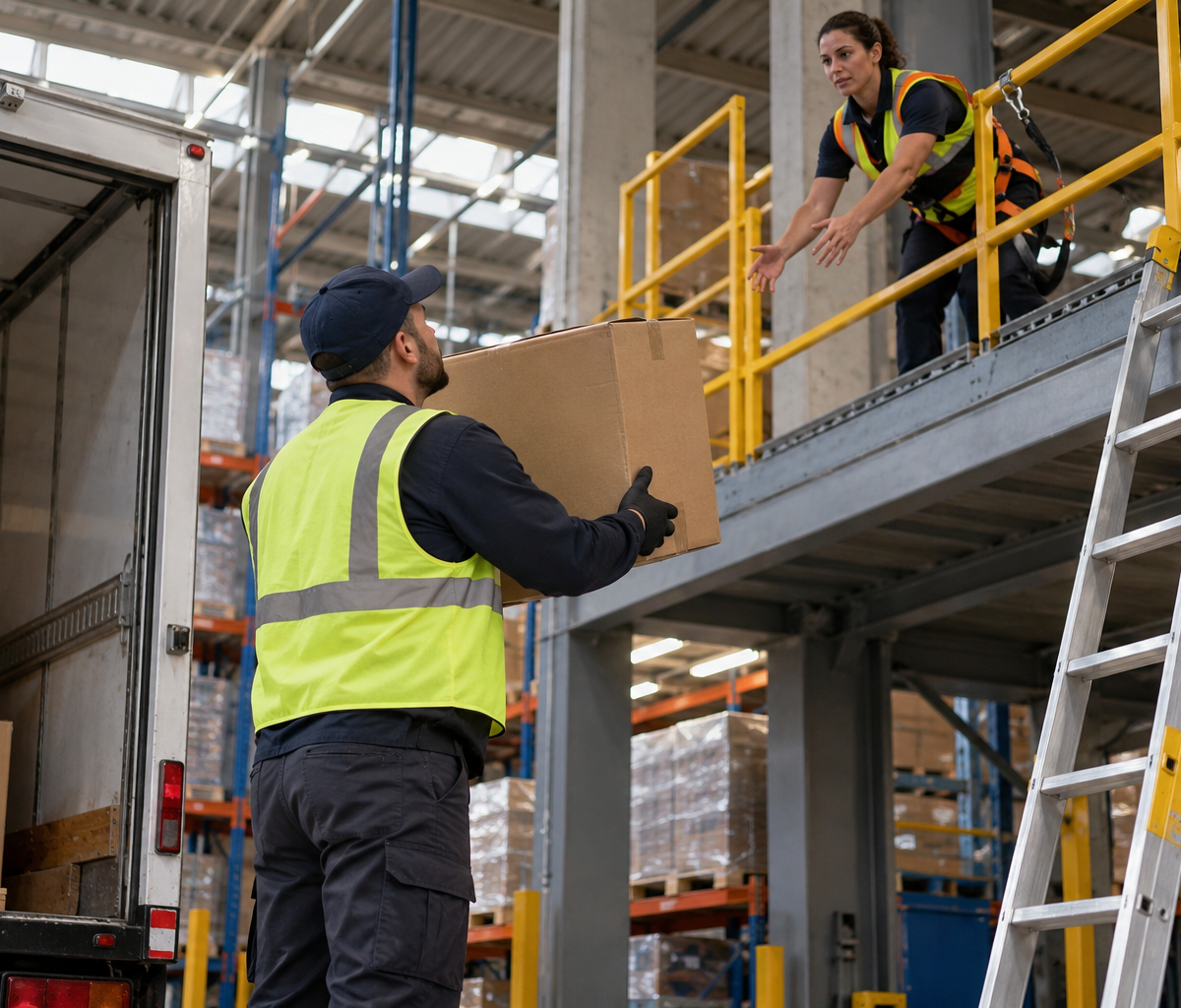
Clarify whether a driver must reach an elevated receiving point, what equipment is involved, and who is trained and authorized to use it.
A delivery job posting mentions dropping parcels at an elevated storage mezzanine. The rest of the description sounds like ordinary van delivery, so a candidate may picture walking through a door and handing over a box. On the first shift, “elevated access” could mean stairs to an approved receiving level, a fixed industrial platform, or a worker using a ladder or lift. Those are materially different duties. Checking ladder or elevated-access duties means finding out whether the role requires work above the normal delivery level and what equipment, training, and authorization come with it.
OSHA has separate rules for ladders and guidance for aerial lifts, including equipment condition and training. Those sources do not establish that a Delpack driver uses either device. The candidate should obtain the actual job task and worksite arrangement before assuming that a reference to an upstairs delivery authorizes climbing, carrying parcels on a ladder, or operating a platform. The employer must describe who performs the elevated portion and where the driver's handoff ends.
Define the elevated-access task
The elevated-access task should be described with a place, a person, and a method. Ask whether the driver simply enters a building and uses ordinary stairs, hands parcels to a receiving worker at ground level, or must reach storage above the floor. If the assignment is at a mezzanine, ask how the parcels move there. A customer may have its own staff and equipment. The driver should not infer that they are allowed to use it.
Look for words in the posting that hide different kinds of work: “place in overhead storage,” “access upper racks,” “use site equipment,” or “complete delivery at platform level.” Each phrase needs a follow-up. How high is the handoff? Is there a guarded walkway or an open edge? Does a load need to be carried while climbing? Is the location part of a warehouse rather than a normal customer entrance? The answer determines whether the task belongs in a basic driver role.
Ask how often the duty occurs. A rare special stop might require a separate trained team; a daily mezzanine assignment may be a core part of the job. Frequency affects staffing, training, route time, and what a candidate should expect physically. It does not change the need for an approved method. “We only do it occasionally” is not a substitute for explaining who may use the equipment when the stop appears.
Find out who controls the site. The driver may work at an employer-owned depot, a customer's warehouse, or a shared facility. Different site owners may set access rules, but the driver's employer still needs to tell the worker what they are authorized to do. Ask whether the driver receives site orientation or whether a customer employee takes the parcel at a designated point. An invitation from someone at the dock does not automatically extend the driver's training or permission.
Checking ladder or elevated-access duties begins with a boundary. A driver can deliver to an approved receiving location without becoming an operator of the customer's ladder or lift. If the written role includes elevated placement, ask for the exact task and equipment in the offer or job description. The point is to know what work is actually assigned before accepting the role.
Ask which approved access equipment is used
The approved access equipment might be a fixed stair, a rolling stair, a portable ladder, or a powered platform. These are not interchangeable. Ask which device is used at each location, who supplies it, who checks its condition, and whether the driver is allowed to use it. Do not assume that a ladder leaning nearby is approved for the task or that a customer's equipment is available to a visiting driver.
OSHA's general-industry ladder rule addresses ladder condition, inspection, loading, and climbing. It includes a prohibition on carrying an object or load that could cause a worker to lose balance while climbing. A parcel that must reach a mezzanine therefore raises a method question: how does the item travel while the person maintains safe access? The employer should provide a workable handoff or material-transfer process, not leave the driver to carry a box in one hand up an improvised ladder.
Ask where equipment is stored and how an unsuitable device is removed from use. A driver who sees a loose step, damaged rail, or obstructed landing should know whom to contact and how the delivery is handled while the equipment is checked. Do not repair or substitute equipment on the spot unless that work is assigned and authorized. A safe route needs an exception path for the day the normal access is unavailable.
If a powered lift is mentioned, ask what type. An aerial lift, scissor lift, forklift work platform, and warehouse order picker have different operating and training requirements. OSHA's aerial-lift fact sheet says only trained and authorized people may operate an aerial lift. The job should identify the actual equipment and the employer's authorization, not use “lift” as a generic label that hides the task.
Some elevated deliveries may use ordinary stairs and a guarded mezzanine, with no ladder or lift. Even then, ask whether the route includes a long carry, a gate or access code, and a receiving point that is open during the delivery window. The candidate can separate the walking and carrying demands from specialized elevated equipment. That distinction prevents a broad “stairs required” statement from standing in for a more hazardous duty.
Verify training and authorization
Required training and authorization should match the exact equipment and site. Ask what instruction is completed before a driver uses a ladder, platform, or lift, who observes competence, and where authorization is recorded. A generic onboarding video about safe lifting does not show that a worker can operate a particular elevated device. The employer should explain whether the driver, a warehouse employee, or a customer representative owns the task.
OSHA's aerial-lift guidance calls for trained and authorized operators and pre-start inspection. Its general-industry standards also address training before certain fall-hazard work. Applicability depends on the device and workplace. A candidate does not need to decide the legal classification alone. They can ask the employer to identify the equipment, required training, supervision, and protective measures that apply to the role.
Check what happens when a trained person is absent. Does the driver leave the parcel at an approved ground-level receiving point, wait for a qualified operator, reschedule, or call dispatch for another instruction? The answer should be decided before a route depends on that stop. A worker should not be pressured to “just do it this once” because the person who usually operates the equipment is unavailable.
Ask whether site-specific orientation is needed. A worker may be trained on a device but unfamiliar with a customer's mezzanine, gate, floor condition, or traffic flow. The employer should say who explains the site and who can stop the task when the actual location differs from the description. Authorization to use a device at one facility does not automatically answer every access question at another facility.
Checking ladder or elevated-access duties includes any promised certification or wage implication only to the extent the offer states it. Do not infer that a driver gets additional pay, a credential, or a warehouse role because the posting contains the word “platform.” Ask for the precise duty and training record first, then review compensation terms separately if the task is genuinely part of the job.
Examine the fall protection plan and handoff point
The fall protection plan depends on the equipment, height, edge, and work performed. Ask whether there are guardrails, a closed gate, an approved personal protection system, or another control required by the employer's site assessment. Do not guess that a vest or helmet is adequate fall protection. The responsible safety lead should explain how the worker reaches and leaves the elevated position, where the parcel is placed, and what happens if an edge or gate is open.
Look at the handoff point itself. A safe stair may lead to a platform where the driver must lean over a rail to place a box. A lift may raise a person but leave the parcel in a position that cannot be reached without stretching. Ask who designed the transfer and whether another worker receives the item. A delivery method should keep the person and load within the approved work area rather than requiring a risky final reach.
Check whether the package can be handled without blocking a handhold or line of sight. OSHA's ladder rule addresses maintaining a hand grasp while climbing and avoiding loads that could cause loss of balance. The driver should not decide that a small parcel is harmless to carry simply because it feels light. The employer's approved method should account for the worker's hands, the parcel size, and the access route.
Ask what to do when the customer requests a different placement. A receiving worker may ask the driver to bring a box above the original handoff point, perhaps to avoid moving it later. The driver should know whether they may decline the unassigned elevated step and whom to call for a revised instruction. A customer request does not change the driver's training or the employer's approved scope of work.
Weather and housekeeping can affect outdoor stairs and indoor platforms, but this article focuses on the elevated-access duty. A wet step or obstructed landing should be reported through the site process. The larger question is whether the role requires a person to climb or operate equipment and whether the employer provides the corresponding controls. Routine safe-lifting technique for a ground-level box is a separate topic.
Work through the mezzanine posting
Consider an illustrative posting for a delivery driver that includes “deliver parcels to elevated storage mezzanines.” The candidate asks the hiring contact to show a normal stop. At one customer, a driver brings parcels to a ground-floor cage and a warehouse employee moves them upstairs. At another, the posting expects the driver to climb a fixed stair to a guarded receiving counter. Those are different physical duties, but neither automatically involves a ladder or powered lift.
The candidate then asks about a third site where boxes are stored on an upper platform reached by a rolling stair. Who owns and inspects that stair? Is the driver trained and authorized to use it? How does the parcel travel without being carried in a way that compromises balance? Where does the handoff end? If the employer cannot answer, the candidate should request the written task description before treating the duty as accepted.
Suppose the rolling stair is unavailable on the route day. The driver contacts dispatch or the site lead and records the access problem. The employer may direct a ground-level handoff, send an authorized worker, or reschedule under its delivery agreement. The driver does not improvise with a portable ladder from the customer. The exception procedure keeps one equipment failure from becoming an unplanned change in role.
Change the example again: a customer offers a powered lift and says it is easy to drive. The driver has no authorization for that equipment. They decline to operate it and contact the employer for a receiving plan. If the role truly requires operating such equipment, the employer must arrange the appropriate training, inspection process, and site authorization before assigning the task. A friendly offer at the dock cannot supply those prerequisites.
The worked example turns on the boundary between doorstep delivery and elevated placement. It does not teach a worker to operate ladders or lifts. A separate warehouse-equipment career guide may help someone considering a role built around such devices, while this article helps a driver decide whether elevated access is an actual duty in the job they are evaluating.
Get the duty in writing
A candidate can ask: Which stops involve elevated access? Is the driver expected to climb, or only hand parcels to someone else? What equipment is used? Who owns and inspects it? What training and authorization are required? How is the parcel moved while the worker accesses the elevated level? What happens when the equipment, trained operator, or approved handoff point is unavailable? A specific answer can be compared with the posting and the actual offer.
Ask for a site example instead of accepting a broad phrase such as “occasional warehouse duties.” The role should describe the equipment, work location, and limits on customer requests. If the employer changes the assignment later, the driver should know whom to contact before undertaking unfamiliar elevated work. Checking ladder or elevated-access duties is complete when the candidate can tell whether the job includes a trained elevated task or only a normal delivery handoff. Related guidance is in the driver guide hub, and local roles appear on the Fort Wayne driver careers page.
Continue with Delpack
Review the Fort Wayne career overview or contact Delpack with a question about the company.