Checking vehicle-cleanliness responsibilities
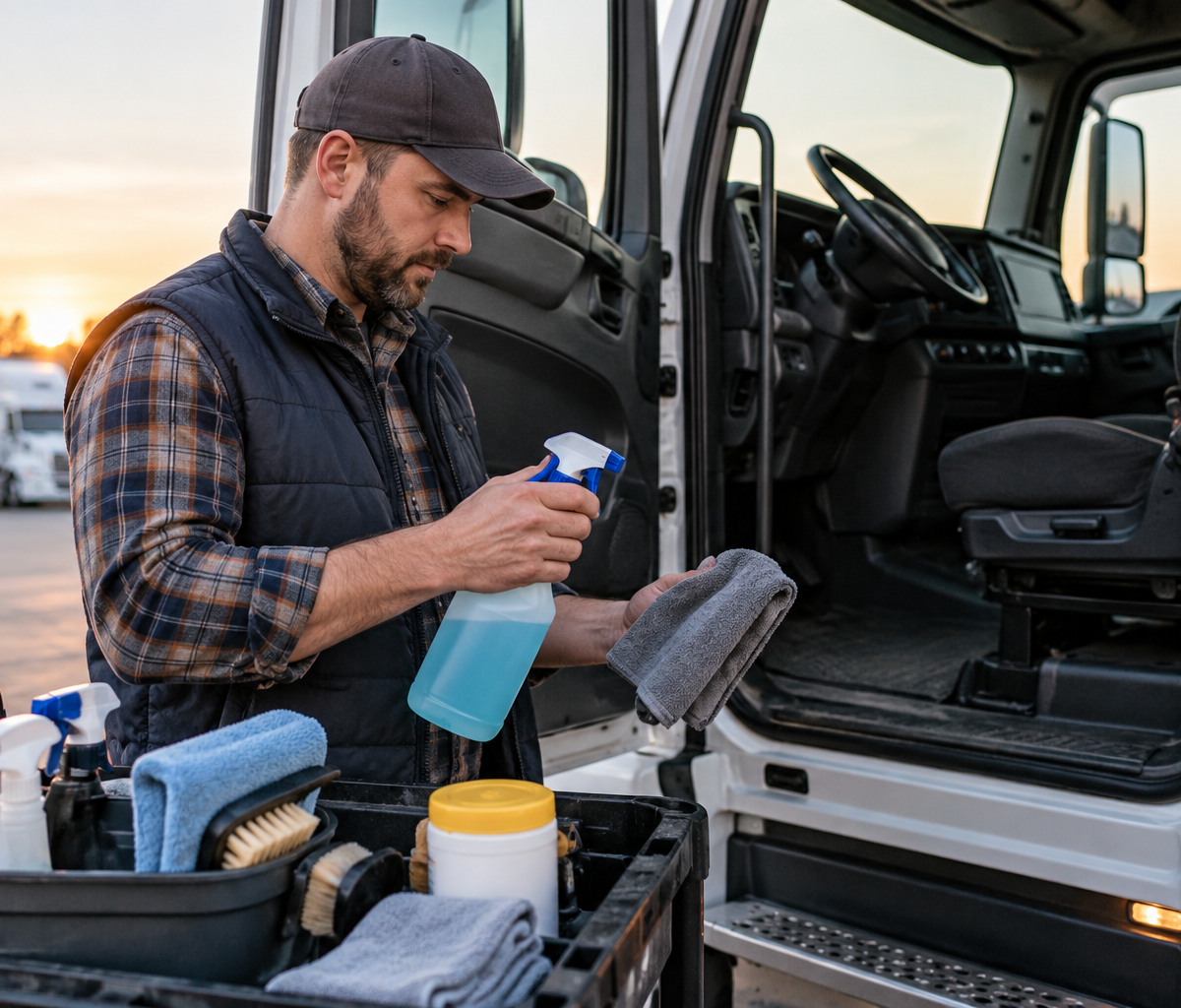
Find out what vehicle cleaning a driver must perform, which supplies are provided and where the required time appears in the workday.
A delivery offer mentions “keeping the van clean,” but the phrase could mean removing personal trash at the end of a shift or completing a scheduled cab-cleaning routine with employer supplies. The difference affects the real workday. Checking vehicle-cleanliness responsibilities means asking what must be cleaned, who provides materials, how often the task occurs, and where the time is recorded.
OSHA and NIOSH advise employers to understand the hazards of cleaning chemicals and train workers who use them. The U.S. Department of Labor also treats hours worked as a fact-specific question under the Fair Labor Standards Act. Those sources do not establish Delpack's cleaning assignment or any worker's pay classification. A candidate should ask for the actual duties and timekeeping instructions in the offer rather than infer them from a short job description.
Define the cleaning tasks
The cleaning tasks should be described in actions rather than a vague standard of appearance. Ask whether the driver removes trash, sweeps the cargo floor, wipes high-touch cab surfaces, cleans windows, handles spills, or completes a more extensive sanitation checklist. A few minutes of personal-item cleanup differs from a scheduled vehicle service. The candidate should know which work is required and which work is performed by a separate cleaning team.
Find out whether the task covers the cab, cargo area, exterior, or all three. A driver may be responsible for leaving the seat and dashboard ready for the next shift while maintenance or a vendor handles vehicle washing. If a van rotates among workers, ask who checks its condition before assignment and how a new driver reports a vehicle that was left dirty by the previous shift.
Ask what happens after a spill. A leaking parcel, food container, or unknown substance may require a different response from routine dust and trash. The driver should know when to stop handling the area and contact a lead rather than use whatever cleaner is nearby. The employer should distinguish ordinary cleaning from a spill needing special handling, equipment, or a trained response.
Find out whether drivers are expected to dispose of customer-related waste. Packaging, damaged goods, and undeliverable items may have custody or disposal rules. “Clean out the van” should not lead a worker to discard an item that belongs in the return process. Ask how cleaning interacts with the parcel check at the end of a route so nothing is mistaken for trash.
Ask who judges whether the task is complete. A checklist, supervisor walk-through, or photo may be used, but the employer should explain what is required before a vehicle can be handed to another driver. If the same van is used on an early shift the next day, the standard should be clear enough that both workers know what condition to expect.
Checking vehicle-cleanliness responsibilities gives a candidate a way to estimate the actual duty. “Clean van” becomes a concrete list of surfaces, materials, and handoff steps. The scope should be understandable before the employee is assigned a route, not discovered at the end of the first shift.
Identify supplies and training
The supplies and training should fit the assigned cleaning work. Ask who provides cloths, disposal bags, approved cleaners, gloves if required, and a place to wash or store materials. A worker should not have to buy a product without knowing whether it is allowed for vehicle surfaces. The employer should name the products and explain any label or safety instructions that apply.
OSHA and NIOSH warn that cleaning chemicals can present health hazards and that workers need information about safe use. Ask whether drivers use ordinary wipes, diluted products, or stronger chemicals and who teaches correct handling. A product labeled “green” is not automatically risk-free. The candidate should be able to see the approved product and know where its safety information is available.
Find out whether cleaning occurs inside a closed vehicle. If an employer expects use of a chemical spray in the cab, ask about ventilation, contact time, and when the vehicle can be used again under product directions. Do not mix products or substitute a household cleaner without authorization. The exact instructions depend on the supplied product and the employer's process, not a general rule in this article.
Ask whether there are restrictions on cleaning vehicle cameras, screens, sensors, or controls. A driver may damage a lens or electrical component with an unsuitable product. The employer should indicate which surfaces are the driver's responsibility and which require trained maintenance. Keeping a vehicle clean should not require experimenting on safety equipment.
Find out what happens when supplies are missing. A driver should know whom to contact and whether the task can be deferred or reassigned. They should not be marked as failing a required cleaning step if the approved materials were unavailable. The handoff record can state what was done and what remains for the responsible team.
Checking vehicle-cleanliness responsibilities includes who owns the materials. A job that requires routine cleaning should have an ordinary supply path and a place to dispose of waste. The candidate can ask to see that path rather than assume the worker is expected to bring personal products to the depot.
Confirm the cleaning frequency
The cleaning frequency may be daily, weekly, after certain spills, or whenever a shared van changes hands. Ask which tasks happen every shift and which occur on a schedule. “As needed” is useful only if the employer explains who identifies the need and how much work follows. A candidate comparing offers should know whether cleaning is a small recurring duty or a substantial end-of-day assignment.
Find out when the task is scheduled. Is the driver expected to clean before loading, after the final delivery, after returning parcels, or between routes? The timing affects where the van is parked and whether supplies are available. A task left until after the recorded shift ends can become invisible in the job description even though it is required to release the vehicle.
Ask whether a shared vehicle is inspected between users. If one driver finishes late and another starts early, there may be little time for a separate cleaning crew. The company should explain who performs the handoff, what condition is required, and how an incomplete cleaning is reported. A new worker should not be asked to absorb another shift's missed duty without knowing how to record it.
Find out how unusual conditions change the schedule. A muddy route, spilled drink, or contaminated cargo area may require extra work or specialized help. The employer should explain how the driver requests that help and how the extra time is handled. An exception procedure matters because the normal daily checklist may not cover every mess a delivery vehicle encounters.
Ask whether cleaning is part of a larger fleet service performed on non-route days. A driver might remove trash daily while a separate team handles periodic deep cleaning. The candidate should know the boundary so they do not underestimate the daily task or assume they are responsible for an entire vehicle detail. Frequency and task scope belong together.
Do not confuse cleaning with fueling or charging. Fueling has its own payment and station rules; cleaning concerns the condition of the vehicle and materials used. Both may happen after a route, but the candidate should ask separately when each task is assigned and recorded.
Check how cleaning time is recorded
Required cleaning time is part of the workday calculation when the applicable pay rules treat it as hours worked. Ask how the employer records the start and end of cleaning and whether the worker remains on the clock after the last delivery. The exact legal result can depend on the worker's classification, facts, and applicable law; the candidate needs the company's stated practice and a way to record actual required work.
Find out whether route completion in the delivery app is the same as the end of paid time. It may not be. A driver might finish the last stop, return to the depot, unload returns, and clean the cab. Ask which system records those minutes. A pay explanation that ends at the last customer door may omit duties the employer still expects before release.
Ask where cleaning appears in the schedule or timesheet. A separate task code may exist, or the driver may stay clocked in through the end of the shift. Either can work if it accurately records the required work. The candidate should know whether a supervisor must approve extra time and what to do when an unexpected spill makes the task longer.
Find out what happens if a driver is told to finish cleaning after clocking out. The U.S. Department of Labor's wage guidance treats off-the-clock work as an area requiring care for covered non-exempt employees. A worker should record the actual time spent on required duties and ask payroll or the supervisor how the employer corrects a missed entry. This article does not decide an individual wage claim.
Ask whether cleaning time is estimated or entered from actual start and finish. A fixed allowance may not reflect a spill or a shared-vehicle handoff. The employer should explain how employees report a longer required task without hiding it to stay within a route target. That answer affects the true duration of the job and the fairness of comparing offers.
Checking vehicle-cleanliness responsibilities is complete when the candidate can place the task on a real shift timeline. The work may be modest, but it still has a location, supplies, and time. Keeping those details visible helps the worker assess the offer without turning a basic cleaning duty into an after-hours surprise.
Work through an end-of-day cab cleanup
Imagine an offer that requires drivers to wipe cab touchpoints and remove trash before returning a shared van. The final delivery is completed at 5:00 p.m., but the driver must still return to the depot, account for parcels, and clean the cab. This is an illustrative offer, not a description of a Delpack schedule or a legal conclusion about pay.
The candidate asks for the task list. Does “cab cleanup” mean a quick wipe and trash removal, or are windows, floor mats, and cargo surfaces included? The employer identifies the approved supplies, storage location, and who handles a spill that goes beyond routine cleaning. The applicant can now estimate the physical work rather than relying on a vague phrase.
Next, the candidate asks when cleanup happens and how time is entered. The employer explains whether the driver stays on the clock until the required tasks end, which code or timesheet captures the minutes, and how an unusually long cleanup is reported. The last delivery time is only one event in the shift. The question here is the cleaning duty; a separate article addresses pay for the whole post-route closeout.
Suppose the shared van contains a leaking package. The driver does not simply wipe an unknown liquid with the routine cab product. They secure the parcel under the employer's process, report the spill, and follow the assigned cleanup or specialist response. The original checklist can be updated to show what was completed and what remains for another team.
Suppose instead the cab is clean on return. The driver still follows the required check and records completion if the employer asks for it. The task may take less time that day, but it is not automatically optional. The candidate should understand whether the company expects an inspection, an action, or both.
Fueling the van after the route would add another task with its own location and expense method. Returning parcels and reconciling scans also add closeout work. Separating these duties helps the candidate learn exactly what cleaning involves and prevents a broad phrase such as “finish up at the depot” from hiding several distinct responsibilities.
Questions to bring to the offer review
Ask which vehicle surfaces drivers clean, how often they do it, who supplies approved products, and what training covers chemical use. Where are waste and used materials disposed of? Who handles spills that are outside routine cleaning? A concrete task list makes it easier to understand the physical scope of the role.
Ask when the task occurs, how its time is recorded, and what happens when cleanup takes longer than planned. If the vehicle is shared, who checks its condition at handoff? If the company uses a cleaning service, which duties remain with the driver? The answer should describe the actual workday, including required duties after the last delivery.
Checking vehicle-cleanliness responsibilities helps a candidate compare offers using the duties that really occur, not only the time spent delivering parcels. Related work guidance appears in the driver guide hub, and local roles appear on the Fort Wayne driver careers page.
Continue with Delpack
Review the Fort Wayne career overview or contact Delpack with a question about the company.