Choosing a carton for a mixed-item order: should the bottle and paper ship together?
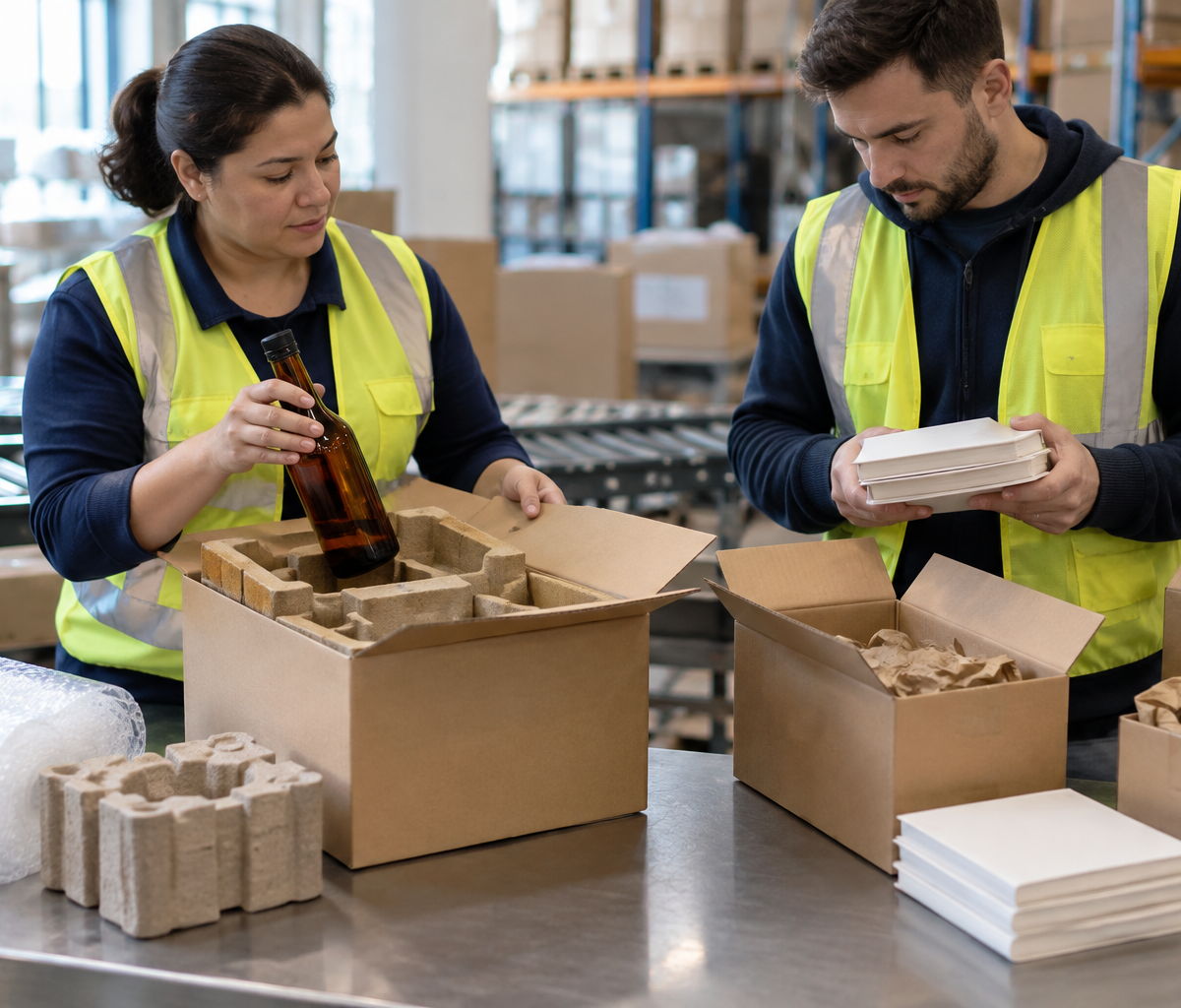
Decide whether a hypothetical liquid bottle and paper goods can share one protected carton or need separate parcels under approved packing rules.
A customer orders a sealed liquid bottle and a stack of paper goods. Both fit inside one available carton by dimension, but a leaking bottle could damage the paper before delivery. Choosing a carton for a mixed-item order requires checking item size, weight, compatibility, protection instructions, and available approved packaging before deciding on one carton or separate parcels.
This is a decision for one actual order. The business may have cartonization rules and packaging designs already approved; the packer or operations lead applies those rules to the item set. The article does not redesign the company’s packaging system. It asks whether a specific single-box configuration can protect both items, or whether separating them is the safer authorized choice.
Check item dimensions and units
item dimensions include the product and any required protective packaging, not only the bare merchandise. A bottle may need a sealed bag, cushioning, or an insert under the seller’s and carrier’s instructions. Paper goods may need a flat, dry support. A box that fits the naked products with no room for protection is not a usable one-carton option.
Measure or use reliable item-master dimensions for the exact variants in the order. Check whether the liquid is one small bottle or a multipack, whether the paper is loose or boxed, and whether the dimensions in the system include retail packaging. If records look wrong, verify the physical items rather than force them into the suggested carton.
Orientation matters. A bottle standing upright beside paper may fit on the worktable, but the parcel can rotate in transport. The pack decision should not rely on a single static position unless the approved design controls movement and orientation sufficiently. Ask what the employer’s instructions say for the product, packaging material, and carrier service.
FedEx’s public packing guidance discusses choosing a box with room for protective material and using suitable containment for liquid shipments. It is carrier guidance, not a universal instruction for every liquid or service. The actual product may have special restrictions, and some liquids require dangerous-goods handling beyond this example. This article assumes an ordinary, nonhazardous product and still requires the site’s approved rules.
The worker should also confirm what the order promises. If two items must arrive together for a customer use case, separation may affect the customer experience. That does not make an unsafe mixed carton acceptable; it means the operation may need a supported two-parcel communication or another approved packing option.
Test item incompatibility in this order
item incompatibility exists when one product’s properties or handling needs can harm another in the same parcel. Liquid and paper illustrate a direct mechanism: a cap or container failure can wet absorbent goods. The question is whether the approved packaging for this bottle contains a leak and keeps the paper protected under expected handling.
Do not infer compatibility from the fact that both items fit. A small amount of liquid can damage a booklet or paper package, even if the bottle itself arrives intact. Check the closure, any required secondary containment, and the paper’s protective sleeve or barrier. If the seller has a tested single-carton method, use it as specified. If the method is missing or the materials are unavailable, escalate rather than improvise a hopeful arrangement.
Other incompatibilities can arise from weight, sharp edges, odor, temperature, or fragile surfaces. This order’s decision is specifically about a liquid next to paper. The operator should name the failure path being controlled instead of applying a generic “mixed items are fine” or “always split” rule. Different products may justify different answers.
Ask whether the bottle has a history of leakage in transit. Damage records, customer reports, and testing can inform how much confidence the team has in a one-carton method. A clean history is helpful but may be based on small volume; one bad report does not automatically condemn every package. The current approved packing standard remains the starting point.
Carrier requirements can differ by liquid type, container, service, and destination. A packer should not decide classification from a product name alone. If the item may be regulated or restricted, the order needs review by the qualified team under the carrier and legal requirements. The choice of one versus two cartons follows that eligibility check.
Compare weight and protection in a one-carton option
A one-carton option must support the combined weight and protect each item. The bottle should not crush or rub against the paper. The paper should not prevent proper containment or closure around the liquid. The available carton needs enough space for the specified materials without excessive empty volume or a bulging seam.
In the hypothetical order, a tested divider or sealed secondary pouch might make one carton acceptable under the employer’s instructions. The packer would verify that the exact materials are available and that the parcel can be assembled as specified. Merely placing paper on top of a cushioned bottle is not proof that a leak cannot reach it after the box turns over.
Weight placement matters to handling. A heavy bottle can shift and strike a lighter paper package during transport if the internal structure allows movement. The operator should use the approved cushioning and placement method, not a personal guess about which side of the box will remain upright. If the carton is too small to protect both items, the apparent dimensional fit is misleading.
One carton may reduce labels, handling steps, and packaging material, but those benefits depend on the actual design. A larger box with extensive barriers may use more material than two right-sized parcels. The decision should compare workable configurations, not an idealized one-box option against an unfairly expensive split.
If no approved single-carton method covers the specific item combination, a supervisor or packaging owner may need to decide whether to use a separate-carton route. The packer’s duty is to surface the incompatibility and apply the authorized path, not quietly invent an untested package to meet a throughput target.
Check the separate-carton option
A separate-carton option puts the bottle and paper goods in different parcels, each with protection suitable for its contents. It removes direct cross-damage from a bottle leak, but creates more package handling, labels, potential shipping cost, and possibly different arrival times. The operation should check those effects before declaring separation the automatic winner.
For this order, the bottle could use its approved liquid package and the paper could use a flat protective mailer or carton, if those are allowed for the service. The exact materials and instructions come from the employer and carrier. The decision maker should confirm that both parcels can be tied to the same order and that the fulfillment system supports the split.
Order identity matters. Two parcels may have separate tracking numbers, scans, and carrier handoffs. The customer may receive them on different days even when both leave at once. A site should know how it records a multi-parcel order and how the customer is informed. Creating an untracked second box is not an acceptable way to protect the paper.
Check whether splitting changes the promised delivery window or service cost. If it does, the correct response may be an approved service or customer exception rather than an unauthorized downgrade. The product-protection decision and customer commitment have to be reconciled through the site’s process.
Separating the items also does not excuse poor packaging of the bottle. It still needs suitable containment and cushioning. The paper still needs protection from bending or moisture encountered independently. The split solves one interaction between items; it does not replace item-specific packing standards.
Choose an approved pack configuration
An approved pack configuration is a documented method the operation is permitted to use for an item or combination. It may be stored in a system, job aid, or product instruction. The operator should check whether a tested one-carton method exists for this bottle and paper, and whether the exact materials are on hand. If it does not, compare the supported split option and escalate any unresolved promise or cost issue.
The decision can be written as a short sequence. First verify the products and any restrictions. Then test whether a single carton has adequate containment, separation, dimensions, and weight support under approved instructions. If it does, use that method. If not, determine whether two authorized parcels can meet the order’s service requirement. The final choice should be recorded so the next station understands what was sent.
Cartonization as a general concept concerns how item dimensions, compatibility, and protection shape carton count and size across orders. This article applies those factors to one liquid-plus-paper case. A packaging engineer might later design a new reusable method if the combination occurs often. The current order still needs a supported choice now.
Do not treat an empty carton on a shelf as an approved design. Material substitutions, missing dividers, or a different bottle size can invalidate the assumed protection. Ask who may authorize a deviation. A concrete exception path lets the packer stop without guessing when the recommended material is unavailable.
Perform a packed-result check before release
A packed-result check compares the physical parcel or parcels with the chosen method and the order record. For one carton, confirm both items are present, the specified liquid containment and barrier are used, the carton closes properly, and the label matches the order. For two cartons, confirm each is complete and both are recorded as part of the same order.
In the hypothetical example, a packer might find that the approved divider is too small for the actual bottle variant. That is evidence that the one-carton option is not currently usable. They should stop, record the mismatch, and use the authorized alternate or escalation. Sealing a box that visibly fails its own standard would turn the decision into a paper exercise.
A quality check at the next station may catch a missing item or inadequate barrier, but the packer should not rely on someone else to fix a known problem. The physical build and system record should agree when the order leaves the station. If a parcel is held, its status should remain visible.
Feedback after delivery can improve the standard. If single-carton shipments of this combination show repeated wet paper despite correct assembly, the packaging owner should review the design. The current operator can preserve the damage evidence; they should not silently change the specification across all future orders.
Keep the order decision specific
The question is not whether one carton is always cheaper or whether liquids should always ship separately. It is whether this exact bottle and paper set can travel together in an approved, protective configuration while meeting the order promise. Dimensions alone answer only the first part of the fit question.
Ask a packer or lead to explain what they would do if the bottle and paper fit but no approved divider is available. A useful answer names the hold or split path, who can approve it, and how two parcels would remain tied to the order. An answer based only on “use more padding” leaves the leak risk and record issue unresolved.
Delpack’s transferable skills for a delivery driver resume guide concerns describing actual work experience. Someone who has made mixed-order packing decisions can cite how they followed approved standards and escalated incompatibilities, without claiming to have engineered the company’s packaging design.
Choose the configuration that protects both items
For a real mixed order, verify the exact products, restrictions, dimensions, combined weight, approved containment, and available carton options. Compare a tested one-carton method with a supported two-parcel method, including tracking and service effects. If neither is authorized and feasible, hold the order and obtain a decision from the appropriate owner.
Choosing a carton for a mixed-item order is a protection decision as well as a fit decision. The bottle and paper can share one box only when the approved materials keep the liquid from harming the paper under the relevant handling conditions. Otherwise, separate parcels or another authorized configuration should carry the order.
Delpack’s Fort Wayne driver careers page lists driver opportunities, not Delpack’s mixed-item packaging policy. The bottle-and-paper example is hypothetical. Actual packers should follow the product’s current instructions, carrier rules, and the employer’s authority for exceptions.
Continue with Delpack
Review the Fort Wayne career overview or contact Delpack with a question about the company.