Cold-storage warehouse work: is a freezer zone right for you?
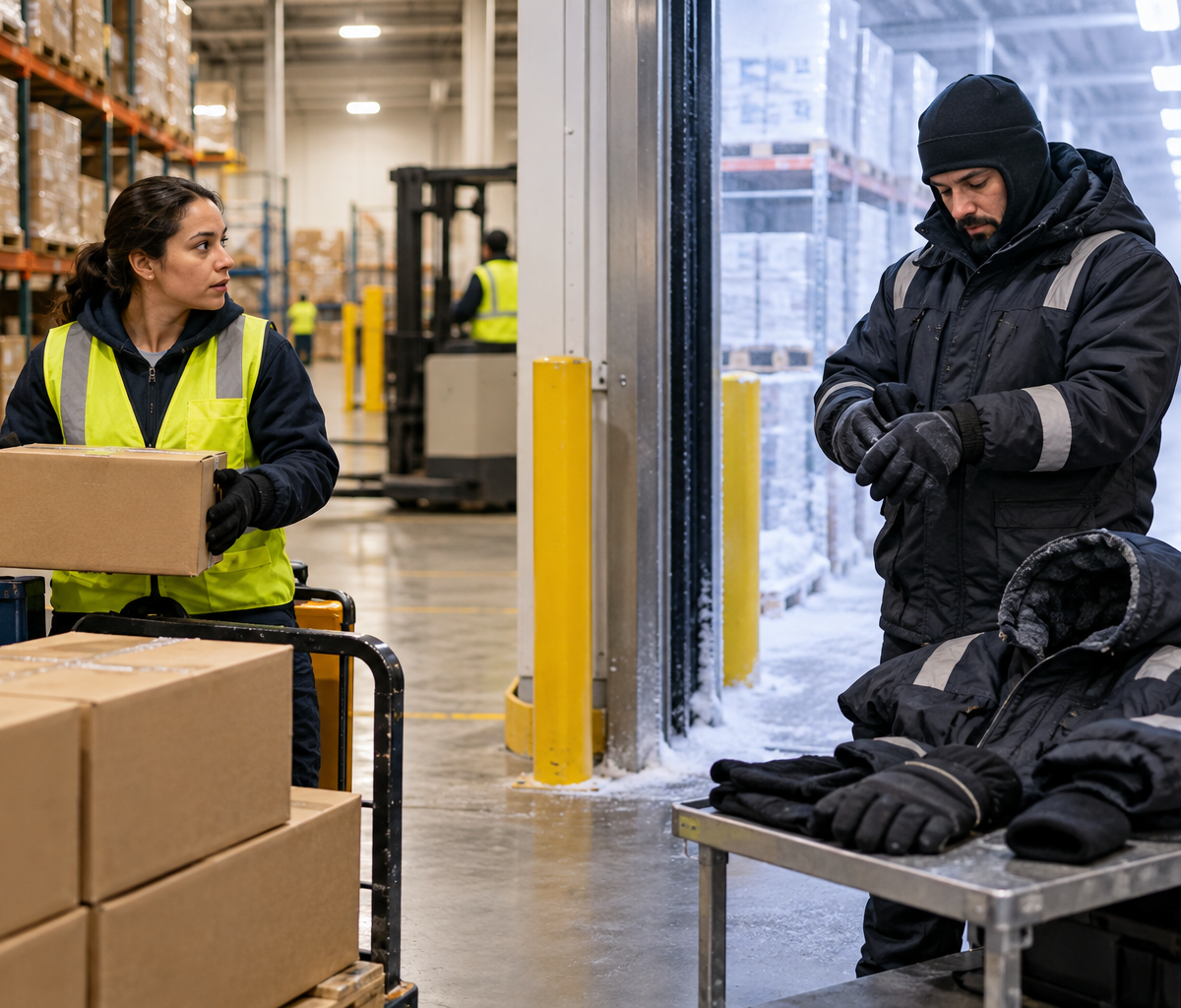
Help a warehouse picker evaluate a freezer-zone opening by checking the actual tasks, time in each temperature zone, clothing, training and schedule.
A picker enjoys warehouse work in an ambient building and sees an opening at a temperature-controlled facility. The posting says some assignments are in a freezer zone. The candidate wants to know whether the change means a colder aisle for a few minutes or a full shift spent picking, counting, and moving goods in that environment. Cold-storage warehouse work is a job-fit decision about the actual zone, time spent there, assigned tasks, clothing and equipment, and the employer’s procedures.
The word “cold” covers different workplaces. A facility may have refrigerated rooms, freezer rooms, ambient staging areas, loading docks, or several of these connected in one process. A worker may remain in one zone or move between zones during a shift. The candidate should find out where the advertised role spends its time. A temperature-controlled building does not imply that every employee has the same exposure or the same daily routine.
Define the freezer zone in the job description
A freezer zone is a distinct work area whose temperature and product-handling rules matter to the role. The candidate should ask which zones they would enter, how long a normal assignment lasts in each, and what tasks happen there. Picking single cases in a freezer, moving prepared pallets through a freezer doorway, and working at an ambient desk beside the freezer are different jobs despite sharing one facility address.
In the example, the posting says “cold storage picker.” The candidate should ask whether the typical shift involves selecting cases from freezer racks, replenishing inventory, counting stock, or staging completed orders. They should also ask whether the freezer assignment is continuous, rotates with cooler or ambient work, or changes with demand. The employer’s answer should describe an ordinary recent shift rather than only the facility’s range of services.
Temperature is part of the answer, but the candidate should not rely on a single advertised number. Air movement, moisture, door openings, physical activity, and the length of time in a zone can change how the work feels. The exact conditions and protections are site-specific. A candidate who knows they tolerate brief cold exposure may still want to test whether a long picking assignment in the same zone fits them.
OSHA’s warehousing guidance recognizes cold-storage operations and cold-stress risks for workers in cold conditions. NIOSH also explains that work in cold environments can create cold-stress risk. Those sources establish that exposure deserves a real conversation. They do not tell the candidate that a particular facility is unsafe or prescribe one clothing set for every warehouse.
Picture an ordinary cold-storage shift
A cold-storage shift can include the same basic warehouse activities found elsewhere: receiving, putting goods into locations, selecting orders, counting inventory, staging outbound freight, and communicating exceptions. The difference is where and how those tasks occur. A worker may have to perform scans, read labels, and handle goods while wearing clothing suited to the employer’s cold-area requirements.
For the hypothetical picker, imagine the shift begins with an assignment to fill several store orders from a freezer zone. The worker checks the order list, enters the designated area, selects the required cases, records the picks, and moves completed handling units to the next controlled step. Later, a missing case triggers a location check. The example shows how ordinary accuracy tasks continue in a cold setting. It does not claim that this is Delpack’s operation or a standard process at every site.
Ask where breaks, warm-up periods, and task rotations fit into the actual schedule. The employer should explain its procedures for the site and assignment. A candidate needs to know whether they can leave the cold area at planned points, how to report discomfort or a problem, and who adjusts work if conditions change. These are concrete questions about the role, not a request for the interviewer to guarantee that cold never feels uncomfortable.
The pace may be shaped by inbound arrivals and outbound cutoffs. A freezer picker can have time-sensitive orders just as an ambient picker can. The candidate should ask about the expected pick volume, the mix of case and pallet work, and how exceptions are handled. Cold conditions can make the same scanning or label-reading task feel different, so a realistic shift description matters more than a generic assurance that the work is “just warehouse picking.”
Ask about protective clothing and work methods
Protective clothing should be discussed as part of the employer’s actual cold-area plan. The candidate can ask what the employer supplies, what the worker must provide, which items are required in each zone, and how fit or replacement is handled. The answer should be specific to the work area and tasks. This article cannot set a universal glove, boot, or layer standard for all cold-storage facilities.
Clothing also affects work routines. A picker may need to scan barcodes, handle labels, grip cases, and move safely while dressed for the zone. Ask how the site trains workers to perform those tasks with its required gear and equipment. If the candidate has previously worked only in an ambient warehouse, it is reasonable to ask whether there is a supervised introduction to the cold-area process.
NIOSH describes cold stress as a risk in cold work and provides guidance on preparation, training, and recognizing warning signs. The candidate should use that information to ask how the employer manages exposure and what a worker should do if they feel unwell. Personal medical questions belong with a qualified professional and the employer’s applicable process. A job article should not infer whether an individual is medically suited to the freezer from general advice.
Training should match the tasks the worker will actually perform. Ask who introduces new employees to the cold area, how they learn to use required clothing and equipment, and where they can report a condition that interrupts their work. If a handheld scanner, label, or pallet cannot be handled as expected, the worker needs a path for getting help without inventing a workaround. A specific answer lets the candidate evaluate how the operation supports accurate work.
Footwear and floor conditions deserve a site-specific answer too. A loading threshold, wet area, or cold room may present different traction and movement issues. Ask what the employer requires and how the work area is maintained. Do not assume that gear appropriate for outdoor delivery has the same purpose or approval in a freezer. The setting, task, and employer instruction govern the choice.
Understand temperature transitions between zones
Temperature transitions occur when a worker moves between cold and warmer areas or when freight passes through connected zones. The candidate should ask how often their role changes areas and whether the work itself requires repeated trips. A worker assigned mainly to one freezer aisle has a different daily pattern from someone who constantly crosses a cooler-to-dock threshold.
The transition can affect the flow of work. Goods may be received, stored, selected, and staged in designated areas according to the site’s procedures. The worker has to know where a completed pick goes and what record or handoff confirms it. A missed scan or wrong staging location can cause an order problem regardless of temperature. The cold setting adds a need to perform those ordinary controls in the correct zone and sequence.
Ask who handles a shortage, damaged case, or unreadable label while the worker is in the freezer. Do they stop and report it on a device, place the item in a defined exception area, or call a supervisor? The employer’s process may differ. Knowing the answer before the first shift helps the candidate judge whether the role offers enough training and support for accurate work under its conditions.
Some candidates may prefer a predictable assignment in one zone. Others may welcome movement among freezer, cooler, and ambient areas. Neither preference is a measure of toughness. The job-fit question is whether the actual pattern, combined with the site’s controls and the candidate’s preferences, makes the position one they can perform reliably.
Compare the freezer role with an ambient warehouse role
The candidate already knows what ambient picking feels like: the movement, scanning, order checks, and end-of-shift fatigue of their current job. They can use that baseline to ask what changes in the new role. Will they pick the same size of items? Is the pace measured the same way? Will they spend more time staging or moving pallets? How much of the shift is in the freezer? The answers can expose a change in work type that has little to do with temperature alone.
Pay, schedule, and commute still matter. A candidate may find the cold conditions manageable but dislike a rotating shift. Another may value the schedule but need more clarity about the gear expense or time in the freezer. Compare the whole offer rather than treating the cold-room label as the only variable. Any pay premium or specific benefit must be verified in the actual posting or written offer; it cannot be inferred from the work environment.
The hypothetical picker might ask to observe the work area if the employer offers a visit. If not, a detailed walk-through from the interviewer can still help: start of shift, first assignment, time in each zone, break schedule, exception handling, and end-of-shift duties. A concrete sequence is easier to evaluate than a claim that “most people get used to it,” which says little about the candidate’s actual assignment.
After the interview, the candidate can write a short comparison with their current job. List the actual picking task, expected time in the freezer, required clothing and who supplies it, schedule, training, and whom to contact when a task or condition becomes difficult. Mark any answer that still depends on a guess. A follow-up request for one missing detail is more useful than trying to decide from the job title or from another worker’s experience at a different facility.
People who have worked in a freezer may bring useful evidence to an application: experience following zone procedures, keeping counts accurate while wearing required gear, and reporting conditions or exceptions promptly. People without that background can describe related warehouse skills honestly and ask what training is provided. The point is to decide fit and readiness, not to pretend that ambient work and freezer work are identical.
Keep warehouse cold separate from outdoor route work
This article concerns a temperature-controlled facility. An outdoor delivery route has different exposure patterns: driving, getting out of a vehicle, walking to stops, and changing weather. The planned outdoor cold-route guide owns that setting. A warehouse freezer role may have controlled indoor temperatures but longer periods in the cold zone. The candidate should assess the actual environment rather than transfer assumptions from one job to the other.
It is also separate from hazardous-material work. Cold storage describes temperature conditions; it does not establish that the goods are hazardous materials or that the role requires a hazmat credential. A posting might contain both kinds of duties, but the candidate must verify each one directly. The job title should not be used to infer an additional certification or risk that the employer has not described.
Delpack’s delivery driver workwear policy guide offers a separate example of how candidates can verify who supplies required clothing and what they must buy. Its advice is framed for driver jobs; the cold-storage employer must answer the warehouse-specific clothing question. Delpack’s Fort Wayne driver careers page covers its driver opportunities and should not be read as a cold-storage vacancy listing.
Decide with the actual zone and shift in view
Cold-storage warehouse work may be a good fit for the candidate who likes warehouse accuracy work and is comfortable with the specific cold-area assignment, training, clothing, and schedule offered. The same candidate may decline if the role requires more freezer time or different physical tasks than they want. The decision does not need a universal verdict on cold work.
Before accepting, the candidate should be able to describe the normal zones, time in each, tasks, required gear, breaks and rotations, reporting path for discomfort or exceptions, and the written terms of the role. If those facts remain vague, ask for a concrete shift example. A choice based on the real assignment is more dependable than one based on the word “freezer” alone.
Continue with Delpack
Review the Fort Wayne career overview or contact Delpack with a question about the company.