How drivers handle a blocked loading zone at a delivery stop
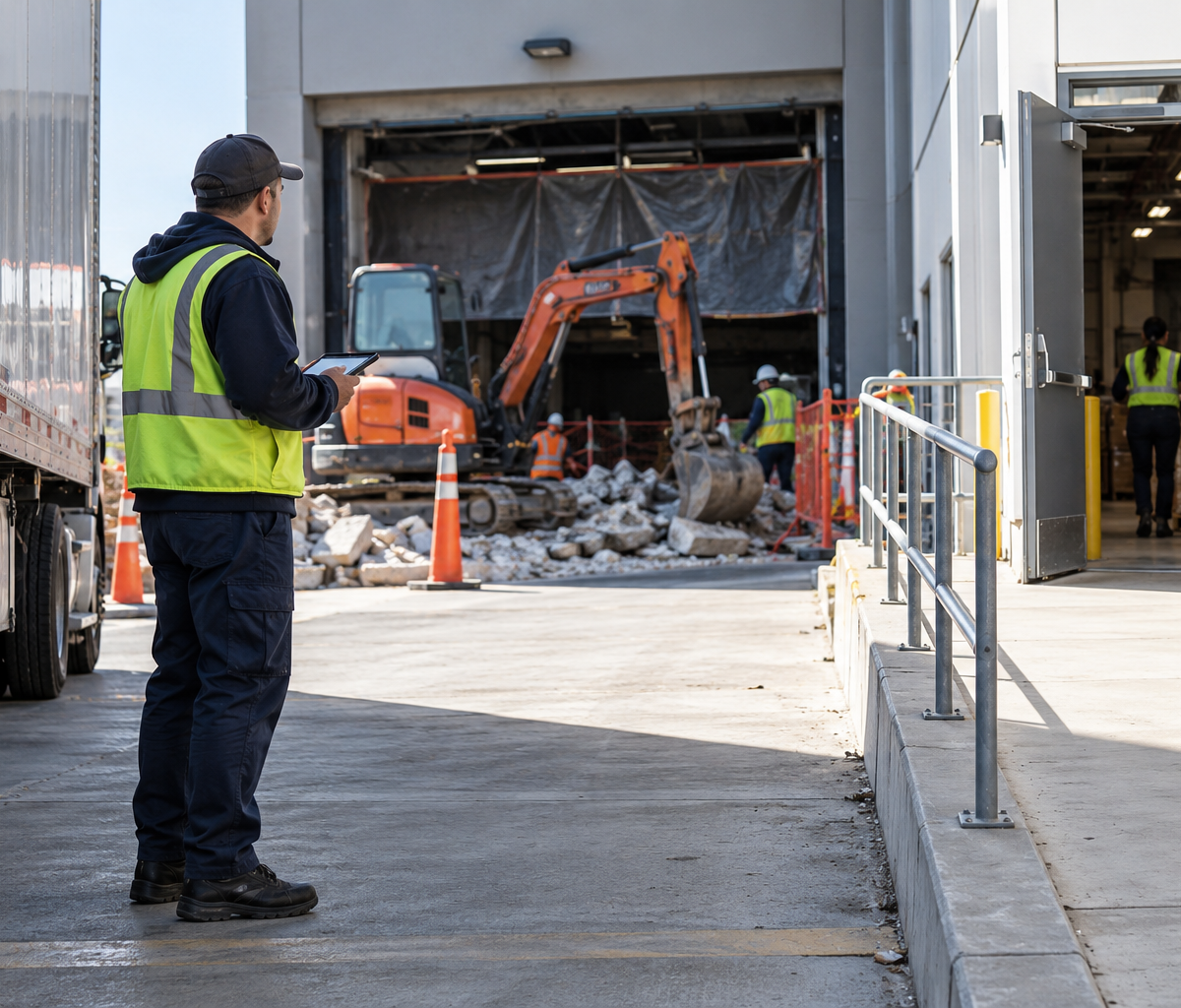
Respond to a freight bay blocked by construction by checking permitted parking, a safe unloading route, site instructions and the truthful stop outcome.
A driver arrives at a business with a scheduled delivery. Construction equipment occupies the freight bay beside the entrance. The parcel can reach the site, but the normal place to stop the van is unavailable. How drivers handle a blocked loading zone is a parking and unloading decision: find a permitted place and safe path, ask the site or dispatch for a workable alternative when needed, and record the actual stop outcome without inventing a delivery.
This is distinct from an address that cannot be found or a broad safety concern anywhere on the route. The destination exists and the specific conflict is the unusable loading space. The driver should not convert a delivery promise into permission to block traffic, a fire lane, a work zone or a pedestrian path. If no lawful and safe option is available during the stop, the route owner needs an accurate exception and a next plan.
Identify the blocked delivery bay and its cause
The blocked delivery bay may be occupied by an authorized construction crew, another delivery vehicle, a temporary closure or equipment placed in the wrong spot. Observe the actual condition from a safe position. Do not enter a signed work area or ask a worker to move machinery before knowing who controls it. The cause affects whether waiting briefly, contacting the site or using another entrance is realistic.
Check the bay's posted restrictions and active hours. A freight loading zone is for loading or unloading under local rules; it is not a general parking privilege. In Fort Wayne, the current city code identifies freight curb loading zones for expeditious loading and delivery or pickup of materials during applicable hours. That local rule does not give a driver the right to stop in another restricted place when the marked zone is full.
Look for the business's own delivery instructions. The site may have a rear receiving door, a second approved bay or a contact who can direct vehicles. Those options need confirmation for this delivery; a side gate used by another tenant may not be available. A large pallet may require a dock, while a small parcel might be carried safely from an authorized curb space. The parcel and vehicle type matter.
Take account of temporary signs and barriers as they stand now. A familiar bay may have been open yesterday and closed today for concrete work. A customer note saved months earlier cannot override cones or a current closure. When the obstruction is temporary, record what was observed and when; that detail helps dispatch distinguish a one-day delay from an access problem likely to affect later deliveries.
For the worked example, a lift and materials occupy the usual bay, with temporary cones closing the approach. The driver remains outside that area and checks the posted sign and the delivery instructions. The first finding is narrow: the normal bay is unavailable. How drivers handle a blocked loading zone proceeds by testing alternatives, not by declaring the address undeliverable on sight.
Find a legal parking option before unloading
A legal parking option is one permitted for the vehicle, time and location under current signs, local rules and site directions. Check nearby marked loading space, permitted short-term curb parking or an authorized private receiving area. Do not infer permission from an empty lane. A spot that looks convenient can be a fire lane, bus stop, travel lane, driveway or accessible space.
Fort Wayne's code prohibits stopping or parking in a designated fire lane. Its parking chapter also lists other specified places where stopping, standing or parking is prohibited. These are local examples of why a blocked freight bay does not make the nearest gap available. A driver in another city must follow that jurisdiction's current rules and posted controls, plus the employer's procedure.
Assess the vehicle itself. A legal car space may be too small for a delivery van or may not allow the doors to open safely. Parking far away can be reasonable for a small, secure parcel if the walking route and company rules allow it. It may be unsuitable for a heavy item, multiple carts or a delivery that requires a dock. The option must support the actual unloading task, not only the vehicle's wheels.
If a nearby bay is occupied by another delivery vehicle, wait only where waiting is permitted and where doing so does not obstruct traffic. Do not double-park and leave the van unattended. If the zone is likely to clear after a short interval, the driver can ask dispatch whether the stop still fits the route. Waiting is a scheduling choice as well as a parking choice; it should not silently consume a later committed window.
Check the safe unloading path from that option
A safe unloading path connects the parked vehicle to the approved receiving point without sending the driver through active construction, live traffic or an unapproved entrance. Consider parcel weight, handling equipment, curb cuts, sidewalk width, crossing points, weather and whether the parcel can be kept under control. A legal parking spot across a busy road may still be a poor unloading plan for a heavy pallet.
Do not cross the construction closure with a hand truck because the site entrance is visible beyond it. Contact the site manager or receiving contact for an approved route if one exists. The workers' temporary traffic controls and the driver's vehicle need to coexist. OSHA's work-zone and motor-vehicle safety guidance emphasizes managing vehicle and pedestrian hazards; the driver should follow current controls rather than invent a path through them.
Check whether the delivery requires the vehicle to remain attended or locked under employer policy. A driver should not abandon a running van to carry a parcel several blocks, and should not leave freight unattended at a curb. The unloading method must preserve package custody and a valid proof-of-delivery path. A signature-required shipment still needs an authorized recipient even if the normal bay is blocked.
For the example, a second marked freight space is half a block away. It is available and the business confirms an unobstructed sidewalk entrance for small parcels. The driver can use it if the vehicle fits, signs permit the stop and the parcel can be carried safely. If the shipment is a pallet that requires the closed dock, the same alternative may fail. How drivers handle a blocked loading zone depends on the actual freight and route to the door.
Use a dispatch contact when no option is clear
A dispatch contact should receive the stop ID, location, visible obstruction, available legal options and estimated effect on the route. The driver should ask the site contact about an authorized receiving alternative, then tell dispatch what the site actually confirmed. "The bay is blocked" describes the obstacle; "the rear dock opens at 2:00" or "no unloading access today" gives the route owner a decision.
Do not assume a site employee can override public parking restrictions. They may authorize use of a private loading area they control, but cannot make a fire lane or public no-stopping zone lawful merely by saying it is okay. Check the site's instruction against posted controls and applicable rules. If the directions conflict, keep the van in a permitted position and escalate.
Dispatch may authorize a later attempt, assign a different vehicle or coordinate a receiving time. Those choices should be recorded in the route system. The driver should not repeatedly circle the block for a long period without a plan, especially if doing so will make later stops late. A short, documented wait may be sensible when the construction equipment is about to move; an indefinite wait is a new route decision.
Communicate before the stop's service commitment is lost. If a business closes at 3:00 and the dock cannot reopen until 3:30, the original delivery is no longer feasible. Dispatch can decide how to inform the customer and preserve the parcel's custody. The driver should not mark the parcel delivered or leave it at a closed entrance to keep the route on schedule.
Write a stop record that reflects what happened
The stop record should distinguish arrival, attempted access, confirmed alternative and final delivery or failure. If the driver used the second approved bay and completed the handoff, record the delivery at the actual receiving point under the employer's proof rules. If no lawful unloading place existed, choose the authorized exception path and note the blocked bay and relevant contact. Do not select a false "customer refused" reason if no customer refused the parcel.
Record times that explain the outcome: arrival at the blocked bay, site or dispatch contact, any wait and departure. A concise note can say construction equipment occupied the marked freight bay, no approved alternate dock was available, and dispatch requested a later attempt. Avoid naming workers as at fault without evidence. The note should help the next driver or supervisor plan a workable visit.
Keep the parcel's physical state aligned with the app. A failed stop means the parcel remains in the driver's custody until a documented return or reassignment. A successful delivery needs actual recipient or approved placement evidence. An app status entered while the driver is still searching for parking can misstate the handoff; complete the event only when the physical outcome is known.
Some systems upload the scan after a delay. If an exception submission times out, check whether it was accepted before repeating the same write. Preserve the attempt and seek the approved support path. A duplicate status entry can confuse later customer communication. The parking obstacle and the data problem should be recorded as separate facts.
Work the construction-bay example through two outcomes
First, suppose the driver carries one small parcel. The marked bay is closed by construction. The driver finds a lawful nearby loading space, confirms the business's alternate entrance and walks the parcel along an unobstructed sidewalk. The authorized recipient accepts it. The stop record shows the actual successful handoff and its proof. The blocked bay caused a short delay, but did not make delivery impossible.
Now suppose the shipment is a heavy pallet and the only approved receiving method uses the closed dock. The nearby curb space is too far away for the site's equipment and cannot provide a safe unloading path. The driver contacts the site and dispatch, confirms when the dock may reopen and records the current failed access. The pallet remains on the vehicle under the employer's process until a revised attempt or other authorized transfer is arranged.
Neither outcome requires the driver to park in the fire lane or unload into active construction. The difference comes from a verified alternative that works for the parcel. If construction conditions change during the shift, the route owner can reassess from the new facts. The original stop record should still show why the first attempt could not use the normal bay.
Review repeated bay obstructions with the customer or site through the responsible operations team. A temporary construction notice, updated receiving instructions or agreed alternate delivery window may prevent drivers from discovering the same problem at the curb each day. Test the new instruction on a later delivery. A changed note is useful only if the access route is actually available for the vehicle and freight involved.
Leave the next driver a usable plan
If the parcel remains undelivered, pass on the confirmed access facts: bay closure, safe alternate tested or rejected, contact name or role, expected reopening time and any instruction from dispatch. Keep the information in the authorized route or exception system, subject to privacy rules. A vague "couldn't park" note forces the next driver to repeat the entire investigation.
Do not turn one site's construction issue into a universal parking shortcut. Signs, local ordinances, private-property rules and the vehicle type vary. The practical sequence is stable: observe the obstruction, test a permitted stop and safe path, contact the site or dispatch when uncertain, and record the supported result. How drivers handle a blocked loading zone should preserve both delivery accuracy and road safety.
Readers can browse the driver guide hub or the Fort Wayne driver careers page for related delivery context. A blocked bay changes the stop plan; it does not justify an unauthorized parking choice or a made-up delivery event.
Continue with Delpack
Review the Fort Wayne career overview or contact Delpack with a question about the company.