How drivers handle an inaccessible address
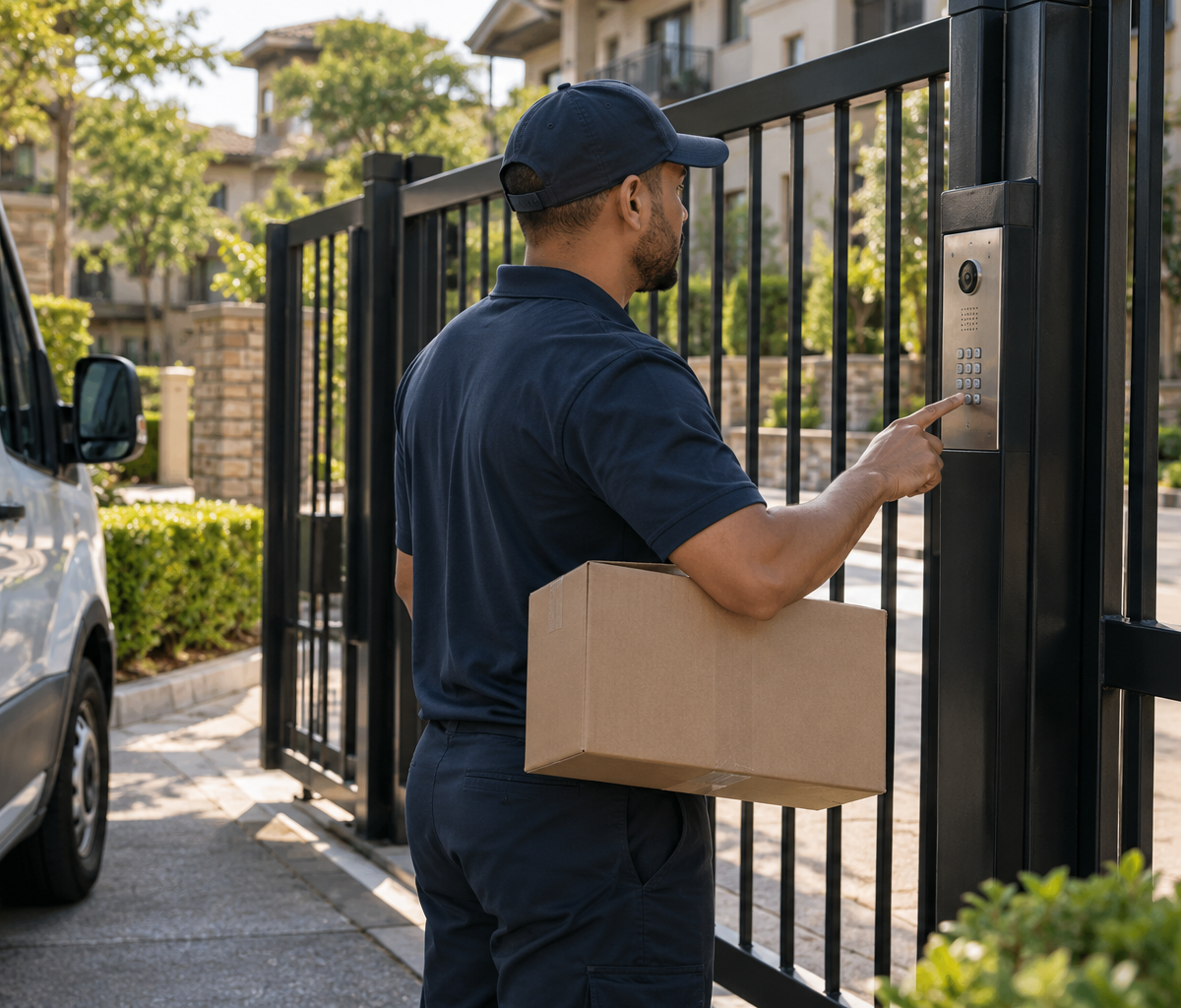
Identify a blocked entrance, use approved contact options, and record an access attempt while retaining the parcel.
A driver reaches the correct gated property with a parcel for a resident. The supplied entry code fails, there is no open public entrance, and the route instructions do not authorize leaving the parcel at the gate. How drivers handle an inaccessible address begins with identifying the actual barrier, using approved contact options, and recording the attempted access without claiming delivery. The parcel remains in driver custody until an authorized handoff or return step occurs.
An inaccessible address is a place the driver cannot physically reach as directed. The label and apartment number may be correct. The recipient may be home. The problem is the blocked path to the delivery point. USPS tracking guidance gives locked buildings and gated communities as examples of a "No Access to Delivery Location" status in its own network. UPS says customers may update delivery instructions, including gate or entry codes, for eligible shipments. Those carrier examples do not define Delpack's codes or grant this driver permission to use an unverified entrance.
This case differs from a wrong apartment number, where the path to the building exists but the destination detail is uncertain. It also differs from a designated drop point that is reachable but unsafe. Here the gate does not open and the driver has no authorized safe route inside. The immediate decision is whom to contact and how to preserve an accurate attempt record.
Identify the access barrier
The access barrier should be described in concrete terms. Is the gate locked, the code rejected, the intercom unanswered, the building entrance closed, or a temporary obstruction blocking the only approved path? A driver should avoid a vague "couldn't deliver" note when a precise reason is available. The distinction helps dispatch decide whether a corrected code, a recipient call, a later attempt, or a different authorized entrance can resolve the stop.
Confirm the driver is at the intended entrance before declaring the code invalid. Check the property name, street number, building or gate identifier, and route instruction. Some complexes have separate resident, service, and visitor gates. The driver should use only entrances the employer or property authorizes. A code intended for one gate may fail at another; a correct address can still have a confusing access layout.
Try the supplied code once or as the employer's procedure allows, noting the time and any displayed response. Do not repeatedly enter random variations, follow another car through a closing gate, climb a barrier, or ask an unrelated resident to open a restricted entrance. Those actions can create security and safety problems without producing a valid delivery. The driver should move to an authorized contact path when the listed access method fails.
Keep the parcel's identity in view. Confirm the package ID and intended unit before calling for help. A large property may have several parcels and residents, and the driver should not discuss a different recipient's package while resolving this one. If the route app groups several packages at the same address, record the access issue for the affected stops individually. A package with an approved public mailroom route may have a different outcome from a door-delivery parcel behind the same gate.
If the access problem is temporary, such as scheduled gate maintenance, record what the driver actually observed. Do not state that a gate has been broken all day unless the property or dispatch verifies it. The attempt record should distinguish the driver's observation from a statement made by a guard or resident. That gives the next driver a useful starting point without turning hearsay into a system fact.
Check the route's service window before waiting at the gate. A parcel that must reach a staffed office by closing time may need immediate dispatch attention, while another stop may allow a later attempt. The driver can report the deadline and the access barrier together. Dispatch should decide the next move with those facts, rather than letting a driver choose an unapproved shortcut to meet the clock.
Use an authorized contact path
An authorized contact may be the recipient through the employer's masked calling system, property staff listed in the route instructions, or dispatch support. Follow the assigned order and privacy rules. If the driver can call the recipient, state the delivery location and access problem without disclosing sensitive shipment details to an unknown person. Verify any new entry instruction through the employer's process before using it.
UPS's public delivery-management guidance says eligible customers can add gate or entry codes to delivery instructions. That shows why a code update may be a legitimate remedy in some carrier systems. It does not mean a driver should accept a code texted by any phone number or alter the official route record personally. If a resident supplies a new code, use the method the employer specifies to confirm and record it.
Give contacts enough detail to act: parcel ID, property, gate used, failed instruction, time, and whether the driver can wait. Dispatch can determine whether there is another approved entrance or a customer contact channel. A short "gate issue" message may not reveal whether the driver is at the wrong gate or the code has expired. Clear details reduce a second failed trip.
If a security guard or property employee offers an alternate handoff, verify that person and location are authorized for this shipment. A guard may be able to open the gate but not accept a signature-required parcel. An accessible lobby may be a permitted delivery point for some shipments but not others. Do not convert the first available human contact into a recipient without checking the service instructions.
Wait only as directed by the route process. A driver may have other timed stops, and an indefinite pause at the gate can disrupt them. Dispatch can decide whether to continue later, move to another stop, or return the parcel. Record the decision and time. The driver should not promise a same-day second attempt unless the authorized owner has assigned one.
Make an accurate attempt record
The attempt record should show that the driver reached the correct property and could not access the required delivery point. Record the parcel ID, location or gate, time, supplied code failure or other barrier, approved contacts attempted, responses received, and the instruction that followed. Choose the employer's access-related exception rather than "no one home" if the driver never reached the door. Do not mark delivery, photograph the gate as proof of delivery, or create a recipient signature.
USPS uses a "No Access to Delivery Location" status for situations such as a locked building or gated community in its own system. That wording is a useful example of why an access barrier and an unavailable recipient are different facts. Delpack or another employer may have different status names. The driver should use the assigned code that truthfully represents the observed attempt and include a clarifying note when the menu is too broad.
Separate the time of arrival from the time of final decision. The driver may arrive at 2:10, try the listed code, call the approved contact, and receive dispatch's return instruction at 2:22. Those are different events. An attempt timestamp should not be invented after the fact, and a later support message should not be presented as if it preceded the first code attempt. Preserve the order so the next shift can follow what happened.
Be careful with photographs and access credentials. A photo of the gate or intercom may be permitted for an exception record, but it should not capture another resident's code, license plate, or private information unnecessarily. Do not save a new gate code in a personal notes app. Use the employer's approved system, with access limited to those who need it for future delivery.
If the app will not accept an access exception without a customer name or other field the driver cannot verify, escalate rather than filling it with a guess. The support owner can advise the proper correction route. A technically complete form with fabricated details would make the next attempt harder to interpret and could falsely assign responsibility to a resident who was never contacted.
Get the next instruction for the parcel
The next instruction may be a verified alternate entrance, a controlled hold, a later attempt, a return to the depot, or another authorized option. Confirm which one applies to this parcel and whether the driver should continue the route. A blocked gate does not by itself authorize leaving the package at the curb or with a passing resident. The delivery promise and service requirements still matter.
If dispatch provides a new entry method, verify the property and unit again after gaining access. The parcel has not been delivered merely because the gate opened. Complete the intended handoff or placement under the original service instructions and record real proof. If the recipient is then unavailable, that is a separate outcome after access was restored; do not reuse the earlier gate exception as the final status.
If the parcel returns to the van, maintain custody through the rest of the route. Keep it identified and secure, then record the depot or next-driver transfer when it actually occurs. A note saying "returned" at the gate is premature. If the parcel is scheduled for a reattempt, the next driver needs the corrected access information or a clear statement that the barrier remains unresolved. An unchanged code should not be sent back as though it had been fixed.
Dispatch may need to contact the customer or shipper about access. The driver can report the facts but should not promise a new delivery date or alternate drop location beyond approved instructions. If the customer asks for delivery at a gatehouse or nearby business, that request may require authorization and a route update. The driver's role is to preserve the parcel while the authorized owner decides.
Work the failed gate-code case
At 2:10, the driver reaches the listed visitor gate for parcel P41. The label and route show Building 4, Unit 8. The supplied code is rejected. The driver checks the property sign and confirms this is the gate named in the route instructions. They do not follow another vehicle through. The parcel stays in the van while the driver contacts the recipient through the approved channel and reports the failure to dispatch.
No recipient response arrives within the allowed wait. Dispatch cannot verify a different entrance and directs the driver to record an access attempt and continue the route with P41 in custody. The driver notes the failed code, gate identifier, times, contact attempts, and dispatch instruction. At the depot, P41 goes to the designated exception owner through a recorded handoff. The system does not show it as delivered or refused by the recipient.
On the next day, the customer supplies an updated code through the employer's authorized process. The next driver sees the corrected instruction and can try the gate. If it works, they proceed to the actual unit and complete the handoff according to the shipment's service requirements. If it fails again, they record a new truthful attempt and return to dispatch. Yesterday's failed code is preserved as history rather than overwritten to make the earlier attempt look successful.
Change one fact: a property employee opens the gate while the first driver is waiting. The driver still needs to verify that entry is permitted and that P41 can reach the intended delivery point. An opened gate may resolve access, but it does not authorize leaving the parcel in an unsafe traffic lane or with an unapproved receiver. Those are separate handoff decisions.
Close the access case truthfully
How drivers handle an inaccessible address is complete when the route record explains the barrier, the approved contacts and decision, and the parcel's current custody. A later successful attempt can add a delivery event without erasing the first failed access attempt. If the parcel remains on hold, a named owner should know what information is needed before another try.
Readers can find related route guidance in the driver guide hub and local career information on the Fort Wayne driver careers page. When a gate code fails, the driver should verify the entrance, use approved contact channels, and record the actual outcome. Reaching the property is a valid attempt; it is not proof that the parcel reached its recipient.
Continue with Delpack
Review the Fort Wayne career overview or contact Delpack with a question about the company.