How drivers handle an unavailable recipient
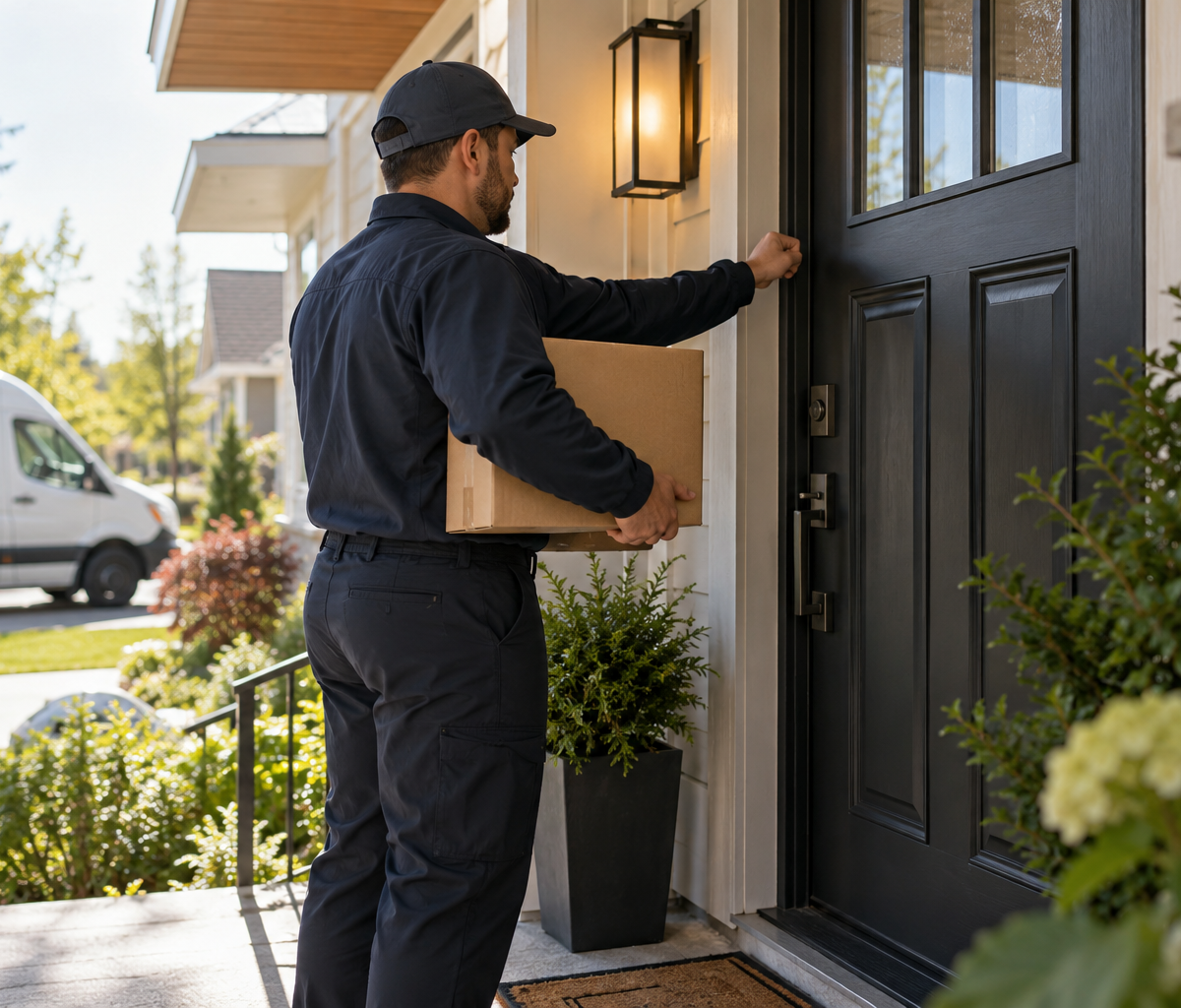
Record a signature-required delivery attempt at an empty address and retain the parcel for an authorized next step.
A driver reaches the correct door with a parcel that requires a recipient signature. The building is accessible, the unit matches the label, and nobody answers the permitted knock or call. The parcel is still with the driver. How drivers handle an unavailable recipient is a decision about a required handoff that cannot be completed now: confirm the service rule, record the real attempt, retain custody, and follow the authorized notice, reattempt, hold or return path.
No answer is different from an explicit refusal. A resident who says "I do not want that parcel" has made a decision; an unanswered door has not. It is also different from a locked gate that prevents the driver from reaching the address. Here the driver can reach the intended door but cannot obtain the person or proof required to finish the delivery. The status and next step should reflect that narrower fact.
USPS tracking guidance describes a "No Authorized Recipient Available" status for a signature-required parcel when nobody can sign. UPS describes a delivery notice after an unsuccessful first attempt. Their exact notices and reattempt rules differ, and neither controls Delpack's workflow. These sources show why an attempted delivery and a completed delivery need distinct records. The driver must use the employer's instructions for the assigned service.
Confirm the required handoff
The required handoff comes from the parcel's service level and current delivery instructions. Check the package ID, address, unit, and proof requirement before choosing an exception. A signature-required parcel cannot become an unattended drop merely because the door is quiet. Some shipments allow an authorized agent or approved alternate location; others require a named recipient or additional verification. The driver should apply the rule attached to this parcel, not a general habit from other stops.
Read the route details in full. A short app card may display "signature" while the expanded instructions specify who can sign or where an approved handoff may occur. If the instructions conflict with the label or another current record, ask dispatch which rule controls. Do not ask a neighbor to sign for a parcel on personal initiative. A willing person is not automatically an authorized receiver under the shipment's service.
Check whether the driver is at the intended door. In a multi-unit building, an unanswered 4B door says nothing about 4A. Confirm the unit and package ID before recording an attempted handoff. If the unit on the label is wrong or missing, that is an address-detail problem requiring clarification, not evidence that the correct recipient was unavailable.
Look for a service instruction that limits when delivery can be attempted. A business may have receiving hours, while a residential signature parcel may have a permitted evening route. If the driver arrives outside an assigned window, report the timing rather than blaming the recipient for not answering. Dispatch can decide whether the visit counts as a formal attempt under the service. The driver should record arrival and contact facts even when the status decision needs a supervisor.
If the parcel has special requirements such as adult signature or identity confirmation, follow the employer's approved procedure exactly. The driver should not infer eligibility from a person's appearance or accept a phone authorization in place of the required physical proof unless the service explicitly permits it. When no qualified person is present, keep the parcel. A customer-facing deadline does not waive the handoff condition.
Make a reasonable recipient check
A recipient check should use the contact methods and wait period the employer allows. Knock or ring at the correct entrance, use the approved intercom if applicable, and call through the authorized system when instructed. Note the time and response. Do not keep ringing indefinitely or enter a private area because the door is unanswered. A reasonable attempt can be documented without turning it into a search for the recipient.
Check any posted or app-approved delivery instruction that might direct the driver to a staffed desk. Verify the desk is an authorized receiving point for this shipment. If the service requires the named recipient, a receptionist may be unable to complete the handoff even if they usually accept ordinary parcels. If an approved desk takes custody, record that actual receiver and proof. If it cannot, continue with the unavailable-recipient path.
Keep the distinction between a silent door and a refusal. A person who answers but declines the parcel creates a different event. If someone says the resident is away, record who supplied that information if policy permits, but do not claim the resident personally refused. If nobody answers at all, say so. These details help dispatch decide whether the next attempt needs a different time or a customer notification.
Consider the physical setting before leaving a notice. A notice can disclose shipment information if placed where others can read it, and some buildings prohibit papers on doors. Use only the employer's approved notice placement and content. If no physical notice is allowed, the support owner may use an electronic notification. The driver should not leave the parcel itself as a substitute for the notice when a signature is required.
Create an accurate attempt record
The attempt record should identify the parcel, address and unit, arrival time, approved contact steps, missing required recipient or signature, and the disposition of the parcel. Use the employer's unavailable-recipient or signature-required exception. Do not mark the item delivered, refused, inaccessible, or wrong address when those events did not occur. A clear code and note let the next driver understand why the first visit failed.
USPS distinguishes its signature-required "No Authorized Recipient Available" status from a no-access location in its tracking guidance. The first means the carrier got to the delivery point but could not obtain a signer; the second can involve a locked building or gate. Delpack's menu may use different wording. The driver should preserve the factual difference in the selected code or approved note.
Record the time of the attempt as observed. If the driver enters the event after returning to the vehicle, the entry timestamp may be later than the door visit. Use the system's proper fields or note process rather than pretending both times are identical. If a device error prevents immediate entry, report it through support and preserve the real sequence. A fabricated delivery time would be especially misleading for a signature service.
Do not invent proof. A photograph of a closed door may support an attempt if the employer permits it, but it is not a recipient signature or proof that the parcel reached the household. A driver should never sign for the customer, mark a box "left with resident," or attach a photo from another stop. The exception record is allowed to say the handoff did not happen.
If the package has multiple pieces, record outcomes by package ID. One piece may be eligible for an approved unattended placement while another requires a signature. The driver should not apply the signature-required exception to every parcel at the address, nor mark all delivered because one piece was left. A shared address does not erase parcel-level service differences.
Use the correct delivery notice
A delivery notice tells the recipient how to learn what happened and what options the service offers. Use the employer's current form or electronic process, with the correct parcel or attempt identity. UPS explains that its notice can help the customer track a package and see possible next steps after an unsuccessful attempt. That is a UPS-specific example; it does not authorize a Delpack driver to promise the same reattempt or pickup options.
Check what the notice actually says before leaving it. A signature-required parcel may have different options from an ordinary package, and some shippers restrict changes. Do not tick a box for "left with neighbor" when the parcel is still in the van. Do not write a pickup location that dispatch has not assigned. If the operation generates a digital notice, confirm the attempt has been entered under the right ID so the recipient sees the correct status.
Place a physical notice only where the employer allows and where it can be found without exposing unnecessary personal information. A building lobby may not be an approved notice location for a specific apartment. If the driver cannot leave it appropriately, note that limitation and alert support. The notice process should follow the actual attempted handoff, not replace the custody record.
A notice is not a return receipt. The parcel remains with the driver until another authorized person or location accepts it. The driver should know whether the notice triggers a customer action, a scheduled reattempt, or a hold. Do not assume tomorrow's delivery will happen automatically. USPS, for example, says its signature-required no-recipient status does not automatically cause a second attempt; this is a USPS policy example, not a rule for the Delpack route.
Set the custody plan for the undelivered parcel
The custody plan should state where the parcel goes after the attempt and who owns the next decision. It may remain secured in the van until shift end, move to a depot hold, transfer to another route, or follow an approved pickup process. Dispatch and the service rules decide which option applies. The driver should not place it in an unapproved locker or hand it to a stranger merely to clear the stop.
When returning to the depot, compare the physical parcel ID with the exception record and record the receiving person or controlled location. A system note saying "returned" at the customer's door is premature. The actual depot transfer happens later. If no receiver is available at shift end, follow the employer's secure-hold instruction and report the unresolved handoff. The parcel should have a known location until the next attempt or disposition.
Ask dispatch whether a time window, contact update, or customer-requested option is needed before reattempt. A second driver who sees only "no answer" may repeat the same unproductive visit. The first driver's precise time and contact record can guide a better plan. Do not add a new delivery instruction from an unverified phone number or alter a signature requirement without authorization.
Check the route closeout. The attempted stop should remain an attempted outcome, and the parcel should appear in the return or hold inventory if still undelivered. If the system says "delivered" while the parcel is physically in the van, escalate the contradiction. A corrected route record should preserve the original failed attempt rather than turning it into a successful delivery.
Work the empty-address signature case
At 3:40, the driver reaches the correct Unit 7 door with P66, which requires a signature. The building entrance is open and the unit matches the label. The driver rings, waits the employer's allowed period, and uses the approved call tool. There is no response. No alternate receiver is authorized in the shipment instructions. The driver retains P66.
The driver records an unavailable-recipient attempt at 3:40, including the contact steps and the absent signer. They leave the correct notice through the approved method and tell dispatch the parcel remains in the van. At shift end, P66 is scanned into the designated hold area. Support can then apply the service's reattempt or pickup process. The route never says P66 was delivered or refused.
Change one fact: a resident opens the door and says they do not want P66. The correct outcome is now a refusal, with a different reason and possibly a different next path. Change another fact: the building's front gate is locked and the driver never reaches Unit 7. That is an access barrier, not an unavailable resident. The physical sequence determines the event, not the driver's guess about why nobody answered.
How drivers handle an unavailable recipient ends with a truthful failed-handoff record and a known parcel location. The driver should follow the assigned service, capture only proof that actually exists, and let dispatch determine the next authorized step. Readers can find other route guides at the driver guide hub and local opportunities at the Fort Wayne driver careers page.
Continue with Delpack
Review the Fort Wayne career overview or contact Delpack with a question about the company.