How route order is set
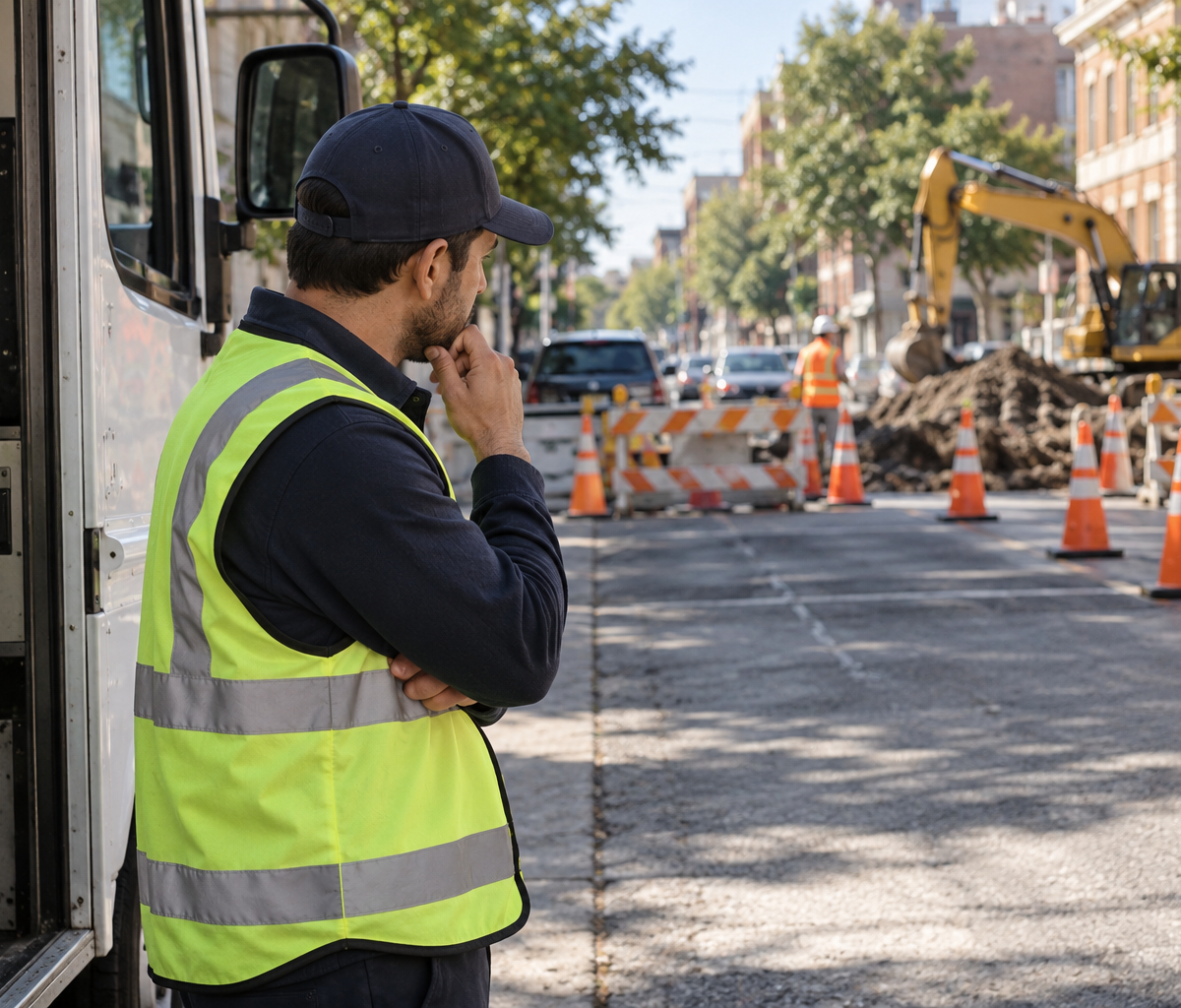
Determine whether the stop sequence is prescribed or adjustable, check service windows, and record an authorized change when roadwork disrupts the plan.
A delivery app lists 24 stops in a particular order. On the way to stop 4, a driver sees roadwork that will make the planned route slower. The driver could reach stop 15 first and work backward. Whether that is allowed depends on the employer's actual route rule, the service windows on the stops, and any instruction already sent by dispatch. How route order is set is a question of authority as well as geography. A map can suggest a shorter path, but it cannot grant permission to change a prescribed sequence.
Some delivery work gives drivers discretion to choose roads and order; other work uses a controlled stop sequence. The Bureau of Labor Statistics notes that many delivery drivers receive a place and time and determine a route, while others have regular schedules. That occupation-level description does not establish a Delpack policy or decide what one app's numbered list means. A driver should learn which part of the route is fixed, which part can move, and how a justified change is recorded.
Identify the route sequence source
The route sequence source might be a dispatch plan, an app-optimized order, a service-window schedule, a written route sheet, or a supervisor's current instruction. The driver needs to know which one controls when they differ. A navigation app might reorder addresses to minimize travel time while the delivery system still expects a business stop before noon. The fastest map order may violate the actual service plan.
Ask whether the stop numbers are mandatory, suggested, or partly constrained. A route may require stops 1 through 5 in order because of appointments, then permit flexible order for residential stops. Another route may have one fixed pickup and otherwise allow the driver to choose. The rule should come from the employer, not from a driver's assumption that every numbered list is a command or that every list can be rearranged.
Check the current version of the route. Dispatch can update a sequence when traffic, missed work, a customer window, or another driver changes the plan. A printed sheet may predate an app update; a text message may have been superseded. Confirm the effective instruction and how a driver is notified of revisions. If the display is stale or unclear, ask the named route owner before making a material change.
How route order is set should be clear before the van leaves. A driver who knows only the list of addresses but not the rule for reordering may face avoidable decisions on the road. The useful pre-route question is: "Which stops, if any, can I move on my own, and which changes need dispatch approval?"
Separate stop order from road choice
The stop order is the sequence in which the driver attempts assigned stops. A driver may sometimes choose a different street to reach the next assigned stop without changing that sequence. This distinction matters during roadwork. A detour around a closed block to reach stop 4 preserves the planned stop order; going directly to stop 15 changes it. The employer may have different rules for each action.
Follow traffic controls and safe driving requirements regardless of the route app. A navigation line is not a reason to enter a closed road or make an unsafe turn. Federal Highway Administration work-zone material describes temporary signs used to guide road users through work areas and detours. That public-road guidance informs safe travel; it does not decide the employer's stop-order authority. A driver can choose a lawful detour while still asking dispatch whether the resulting delay justifies resequencing stops.
Clarify whether the app will automatically reorder after a detour. Some systems may recalculate a recommended path without changing the underlying service windows or customer commitments. Treat the new display as information until the employer's process establishes that the sequence changed. A driver should not infer approval from a map pin moving up the screen.
If road choice is also restricted, learn that rule explicitly. Certain vehicles may be barred from a road, and a site may require a designated approach. The driver still has to obey posted restrictions and drive safely. A practical support message includes the blocked road, current location, affected stops, and proposed detour or sequence change. That lets dispatch answer the right question.
Check time windows before changing sequence
A time window is a stop-specific constraint that can make an otherwise efficient reorder unworkable. A business may receive freight only during staffed hours, a pickup may be ready after a specified time, or a service may require delivery by a committed deadline. Read the route's actual instructions before moving a stop. Do not assume that residential-looking addresses have no constraints or that a customer's preference can override a contracted service window.
When considering a change, identify the stops that would move later and the one that would move earlier. If reversing the route puts stop 2 after its cutoff, the shortcut may create a missed commitment. If it brings a pickup before freight is ready, the driver may waste a visit. The assessment should use current route data and reasonable travel estimates; it should not promise exact arrival times from a static map.
Look for dependencies beyond clock time. A driver may need to deliver bulky freight before collecting a large pickup so the vehicle has space, or may have a controlled handoff that must occur before another stop. The separate mixed-route sequencing article addresses how operations design those constraints. This guide asks what authority the driver has to change an existing order after those commitments have already been built into the route.
If a time-window field is missing or contradictory, contact dispatch. A route app can list stops while a special instruction sits in a separate record. The driver should not silently remove the constraint because it is inconvenient. The support owner can confirm the governing window and whether the proposed reorder is acceptable.
Find the change permission for this route
The change permission defines a driver's authority to resequence work. The employer may permit drivers to reorder ordinary stops within a zone, require approval for any change, or allow exceptions only when traffic or access makes the planned path impossible. The driver should know who grants an exception and how to contact them. A co-worker's routine habit is not a substitute for the current rule.
Ask what information dispatch needs for approval: route ID, affected stop IDs, road condition, new proposed order, expected impact on windows, and any pickup or vehicle-capacity effect. A message saying "traffic is bad" may not show why stop 15 should move ahead of stop 4. A concrete proposal lets the route owner see the tradeoff and record the decision.
Do not request approval while driving. Occupational Safety and Health Administration guidance says a driver who needs to use a phone should pull off the roadway at a safe place before calling or texting. Park, inspect the route facts, then communicate. If the issue is urgent and stopping is unsafe at the current location, keep driving to a safe place. The pressure to protect a schedule does not justify distracted driving.
If contact fails, apply the employer's no-contact rule. Some operations may allow a limited safe deviation, while others require the driver to hold the affected work. Do not invent an approval from silence. Record what was observed, where the driver was, and what decision was made under the documented fallback. Dispatch can then reconcile the route history when contact resumes.
Work the roadwork reversal example
Consider an illustrative route of 24 stops. The app lists stops 1 through 24, with a business delivery at stop 3 before 11:00 and a residential cluster at stops 15 through 24. At 9:30, the driver finds roadwork on the direct approach to stop 4. A detour is posted. The driver considers driving to stop 24 and working backward to avoid the work zone. The employer's rule permits ordinary residential resequencing but requires dispatch approval when a committed window or designated route segment is affected.
The driver first checks whether a lawful detour reaches stop 4 without changing stop order. It does, but the longer drive would make the later residential cluster slower. The driver parks safely, checks the time window at stop 3, and identifies which stops would move under the proposed reversal. Stop 3 can still be served by its deadline if the driver follows the current order through that point. The driver does not skip it to start at stop 24.
The driver contacts dispatch with the work-zone location, current route position, affected stop IDs, and a proposal: complete stop 3, use the posted detour for stop 4, then reverse only the unconstrained residential section after confirmation. Dispatch approves that limited change and notes it in the route channel. The driver updates the app through the approved mechanism or records the deviation as instructed. The customer's delivery history should show actual attempts and times, not fictional scans in the original sequence.
Suppose dispatch instead says the residential order must remain fixed because another service commitment is not shown on the driver's map view. The driver follows the prescribed sequence using the safe detour and reports any delay. The roadwork still matters, but it does not create independent authority to reverse the entire route. The named route owner can adjust promises or reassign work if needed.
This example is about permission to change an existing order, not creating the route from scratch. The driver has already received a valid assignment. They are assessing a new road condition against that assignment and the employer's change rule. The answer may differ by route and service, so the article does not supply a universal "drivers can reorder" rule.
Record an approved route deviation
A route deviation record should explain the change when the employer requires one. Include the affected stop IDs, reason, approval owner, time, and actual sequence followed. A road closure or detour notice can be described without overstating it as a complete route shutdown. If the driver had discretion to change order without approval, the system may still require a note for a substantial deviation. Follow the local standard.
Keep package and attempt events tied to what physically happened. A stop delivered at 14:00 after resequencing should carry that actual event, even if it had originally been fourth on the plan. Do not scan stops in their planned order after finishing them out of order just to make a route report look tidy. A truthful event history helps dispatch answer customer questions and review missed windows.
If the approved change affects a pickup, handoff, or driver transfer, confirm that the other owner knows. A new sequence can cause a parcel to be ready at a different time or a receiving team to expect the van later. The route owner may coordinate those changes centrally. The driver should record the permission and follow the updated communication path instead of sending separate informal promises to each party.
At shift end, compare the actual stop order with any open route exceptions. A reordered stop that was never attempted is still unresolved; a stop completed out of order is not automatically an exception. Report differences the app does not explain. The review should focus on service outcomes and factual chronology rather than forcing the final list back into numerical order.
Use the authorized order for this route
The authorized order may be fully prescribed, partly flexible, or left to the driver within service commitments. Learn which applies before relying on a map suggestion. When conditions change, check time windows and the actual change rule, then contact dispatch where required. That gives the driver a practical way to respond to roadwork without guessing who owns the route decision.
Route receipt, stop-order authority, and mixed pickup planning are related but separate. Receipt tells the driver what work was assigned. Stop-order authority tells them who may change its sequence. Mixed-route planning decides how pickups, delivery promises, and capacity fit together before or during operations. Keeping those questions separate helps the driver ask a precise question when a road closure disrupts the day.
How route order is set ends with a clear source of authority and a record of any change actually made. The driver guide hub covers related route decisions, and the Fort Wayne driver careers page lists local openings.
Continue with Delpack
Review the Fort Wayne career overview or contact Delpack with a question about the company.