Moving work versus package delivery: few work sites or many route stops?
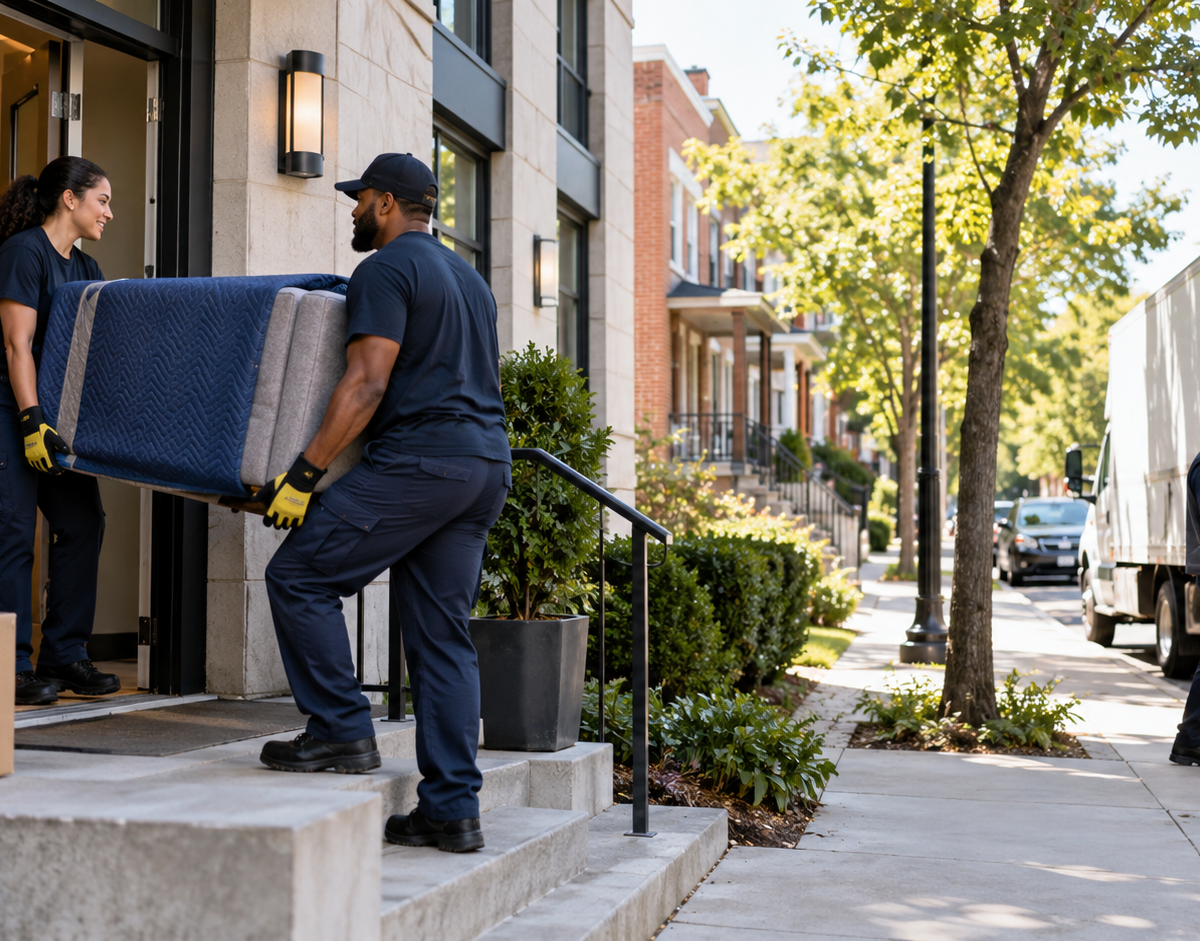
Compare sustained packing and loading at a few moving sites with individually addressed handoffs across a package route.
A moving crew may spend most of a morning in one apartment. A package driver may reach many addresses in the same period. Both jobs can involve lifting, loading, a vehicle, and customer property, but the effort is distributed differently. A moving work versus package delivery choice is about how long you want to remain at each site, how much of a customer’s belongings you handle, and whether you prefer a sustained loading project or a sequence of separate stops.
O*NET describes manual material movers as workers who move freight and other materials, including movement to and from vehicles. Its light truck driver occupation covers pickup and delivery of merchandise or packages and may include loading and unloading. Those profiles describe broad work, not every employer’s specific tasks. A mover may also drive; a package driver may spend significant time loading. Look at the daily sequence in the actual job rather than assuming the title tells you how hours are divided.
This comparison does not turn on whether a sofa is larger than a parcel. That is the focus of the separate furniture-versus-parcel choice. Here, imagine two roles: one helps empty, transport, and unload the contents of an apartment, while the other delivers individually addressed packages across a neighborhood. The question is where the worker’s attention and physical effort concentrate.
Site-based moving work stays with one customer longer
The demands of site-based moving work can start before the first item reaches a truck. A crew may need to understand which belongings are included, which rooms are ready, and how items will be protected and identified during loading. The exact packing service varies. Some customers pack their own goods; some jobs assign packing to the crew. Ask whether the role includes packing, wrapping, disassembly, inventory, and reassembly, or only carrying prepared items.
Picture an apartment move. Workers arrive, walk the site under their company’s process, and begin moving belongings from several rooms. The work is not completed by one handoff. A decision about the first group of items can affect how the vehicle is loaded and how easy unloading will be later. If a box is unlabeled or an item is already damaged, the crew needs the employer’s method for recording that condition before the work proceeds.
A mover may work around a customer’s home or business for hours. That calls for attention to doors, walls, floors, and belongings throughout the visit. Ask what protective materials the employer uses, who places them, and how a worker reports a concern. A package driver also handles customer property, but usually does not manage the movement of a room’s contents through the site.
Moving work often involves a team with shared decisions about the order of loading and the path through the property. Ask who leads the crew, how tasks are divided, and whether a new worker is taught the company’s packing and loading method. You may enjoy the sense of completing a larger project with others. You may also find the long time at one site tiring if you prefer frequent changes of location.
The destination can be another extended work period. Unloading the truck does not end the job if the service includes placing boxes in marked rooms or reassembling specified furniture. Ask how workers confirm where items belong and what counts as a completed move. A customer may change instructions during the day; the employer should define who can approve extra work or a change in scope.
Weather, building access, elevators, and parking can affect both jobs, but in a move one site constraint may shape several hours of work. A slow elevator can repeatedly delay carrying trips. A missing loading space can complicate the whole schedule. Ask how the company plans for these constraints and who contacts the customer or building when access differs from the plan.
Multi-stop package delivery distributes work across a route
In multi-stop package delivery, the driver begins with many separately assigned items and destinations. Each stop requires identifying the right package, reaching the approved place, and recording the outcome. A single address may take little time, but the cycle repeats. The vehicle organization and route information must help the driver find each item as the day progresses.
At one stop, the driver might meet a recipient. At another, access could be blocked or the address unclear. The driver follows the employer’s procedure for each exception while still managing the remaining route. Work is spread across small decisions at many locations, instead of concentrated in the packing and loading of one customer’s property.
Driving is more interleaved with the physical work. The driver moves the vehicle, parks or reaches a permitted stopping point, handles a package, and continues. The time between stops varies with geography and traffic. Ask how many distinct addresses are typical and how much of the shift is spent at stops versus driving. A posting that gives only hours and mileage may hide the actual number of handling cycles.
Delpack’s delivery route performance metrics guide looks at how a route’s results can be measured. For this career comparison, metrics matter because they reflect repeated stop outcomes, rather than a single long project at a customer site. The guide does not establish the stop count or pace of a particular opening; the employer must provide that information.
Package delivery may appeal if you like visible progress through a list of separate assignments. After one handoff, you move to another address. It may be less appealing if you prefer to stay with a project long enough to see the whole site transformed. Repeated entries and exits can feel fragmented to someone who enjoys sustained teamwork at one location.
Compare an apartment move with a neighborhood route
Imagine a moving crew and a package driver starting at the same time. The crew reaches an apartment where the customer has prepared most boxes but left several fragile items unpacked. The employer’s service terms determine whether the crew packs them, asks the customer to finish, or records a delay. The package driver begins a neighborhood route with individually addressed parcels and checks the vehicle organization before the first stop.
By midmorning, the crew may still be carrying belongings from the apartment to the vehicle. Each trip through the building is part of the same customer project. The package driver may have completed multiple handoffs and encountered one inaccessible address. Both are working continuously; their progress appears in different units. The crew measures completion of a site’s inventory and loading, while the driver measures separate stop outcomes.
After travel, the movers reach a second site and unload the same customer’s belongings. A box intended for the bedroom is found among kitchen items. The crew uses the customer’s labels and company procedure to place it correctly or resolve uncertainty. The package driver reaches a building with several separate recipients and must avoid mixing up parcels that happen to share an address. The mover’s challenge is placement within one customer’s property; the driver’s is matching each parcel to its assigned handoff.
At day’s end, the crew may have completed one move and perhaps prepared for another. The driver may have completed many stops and reconciled exceptions. It would be misleading to say that the job with fewer customer sites is easier. A move can involve sustained physical work and property accountability at each site. A package route can involve repeated handling, driving, and decisions under a stop schedule.
The moving work versus package delivery decision becomes clearer when you picture the hour after an unexpected delay. If an elevator fails during a move, the crew may need to revise the site plan with its lead. If one delivery stop fails, the driver may document the exception and continue to the next address. Which kind of recovery would you rather handle?
Customer property responsibility has a different scope
Movers may be responsible for many belongings inside a customer’s home or business. A company may use an inventory, condition notes, protective materials, and a process for claims or exceptions. Ask what the worker personally records and who reviews concerns before the truck leaves. The breadth of property handled can make accuracy and communication a major part of the job.
A package driver is responsible for assigned items and their authorized handoffs. The driver generally does not inventory the contents of a customer’s apartment. Instead, they must keep many separate packages correctly matched to destinations and report problems they observe. Both jobs require care, but the scope of property at one site differs sharply.
Ask whether a moving role includes packing items the customer has not prepared. That duty can increase the amount of time inside the property and the worker’s involvement with fragile or personal belongings. Ask whether the company provides packing materials and teaches a specific method. Do not infer from a “mover” title that the crew either does or does not pack.
For package delivery, ask how the employer handles a parcel with visible damage or a disputed handoff. The driver should have a way to document what they observed. The job may involve a brief customer explanation, but it does not turn the worker into the manager of the customer’s whole property. This distinction helps you judge which form of accountability you would prefer.
Use the posting to test the daily rhythm
For a moving job, ask how many customer sites are typical in a shift and what happens at each: packing, loading, driving, unloading, and placement. What crew size is normal? Who leads when a customer requests an extra task? How are pre-existing damage and access problems recorded? These answers show whether the role is a sustained site project or a series of shorter moves.
For package delivery, ask about the normal number and type of stops, vehicle preparation, and end-of-day exception work. How much time is spent driving compared with handling parcels? Does the driver work alone at most stops, and what support is available when access or an item creates a problem? A route description should reveal the repeated cycle you would perform.
Check the actual physical and qualification requirements of each opening. Employers may use different vehicles, tools, crew arrangements, and training. O*NET’s broad occupation descriptions cannot settle whether you meet a specific job’s requirements. Ask about the equipment and tasks you would perform during the first weeks, not only the title printed on the application page.
Delpack’s Fort Wayne driver careers page can show current delivery openings and their stated duties. It is not evidence of a household moving service. Compare a moving opportunity against its own verified posting, especially the packing, loading, property-record, and crew responsibilities.
Make the moving work versus package delivery choice by where you want the effort to sit. Moving work may keep you with a customer’s property and a crew for hours at a few sites. Package delivery distributes attention across many independent handoffs and trips between stops. Confirm the daily sequence in each real opening before deciding which rhythm fits you.
Continue with Delpack
Review the Fort Wayne career overview or contact Delpack with a question about the company.