Quality inspection in fulfillment: would you catch the defect?
Decide whether independent pre-release checks, precise defect records, and routing failed items for correction fit your interests.
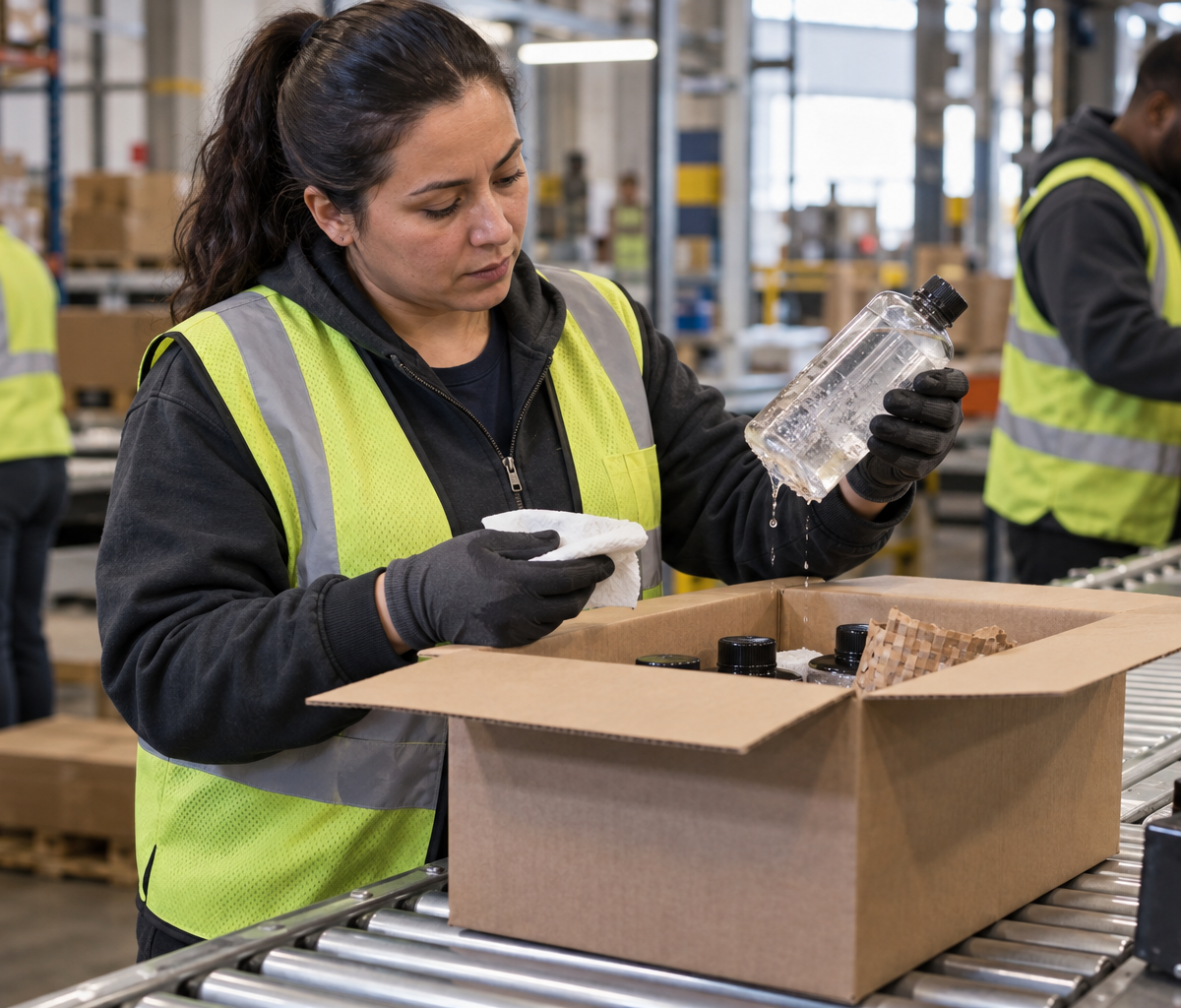
An order contains the right bottle, in the right quantity, but a small amount of liquid has escaped around its cap. A picker retrieved the correct item and a packer could fit it in a box. Someone needs to stop the unit before release and record what is wrong. Quality inspection in fulfillment may fit a person who likes independent checks against defined criteria and careful handling of failed items.
An inspector in a fulfillment operation may examine product condition, order accuracy, packaging condition, or a specified combination. The exact checkpoints differ by employer. The candidate should ask what is inspected, when, how much judgment the role carries, and what happens after a failure. This article focuses on pre-release detection and documentation, not on doing the picker’s or packer’s routine work for them.
Use inspection criteria that apply to the item
Inspection criteria are the conditions a unit or order must meet at a particular checkpoint. They might cover item identity, quantity, seal condition, visible damage, packaging, or labeling. A worker should use the employer’s current specifications rather than an impression that an item “looks okay.” Ask how criteria are displayed and updated, especially for products whose acceptable condition is not obvious.
For the leaking bottle, the inspector first needs to know whether the check covers a cap, seal, visible residue, carton condition, or all of them. If there is liquid on the container, the worker should follow the site’s handling and spill procedure. The amount of liquid alone does not settle whether the unit can ship. The applicable product and safety rules do.
Not every item receives the same type of inspection. A soft garment, a sealed bottle, and a fragile electronic product can have different observable defects. Ask whether workers are trained by product family, how they access instructions, and who decides a borderline case. A candidate who enjoys learning specific criteria may find the role engaging; someone who wants one simple rule for every item may not.
The Bureau of Labor Statistics describes quality control inspectors as examining products or materials for defects or deviations from specifications and recording results. That broad occupation includes industries beyond fulfillment. It supports the role’s basic check-and-record pattern, but the employer’s own standards define the work at a given facility.
Inspection can be comprehensive for certain orders or based on a defined sampling instruction. A worker should know which units they are assigned to inspect. Designing a statistical sampling program and deciding how many parcels to examine across a network is a separate analytical decision. The candidate’s question is how the site tells an inspector what to check today.
Keep an independent check before release
An independent check gives a second view before a unit or order is released. The inspector may be a separate person or a worker assigned a distinct inspection task. The point is that a completed pick or pack step does not automatically prove the item is suitable to ship. Ask where the check sits in the flow and how the employer prevents a failed unit from slipping back into release.
In the bottle example, the picked item and quantity are correct. The inspector still finds a condition failure. They should avoid fixing the record by marking an unrelated field or quietly replacing the bottle without following the authorized path. A correction may need a new unit, a repack, or a hold. The inspector reports the finding and routes it according to the site’s rules.
Some quality roles include rework. If the posting mentions both inspection and correction, ask which defects the inspector may correct personally and which require another team. Tightening a cap, replacing a label, or repacking a parcel can carry product and process implications. The candidate should know the allowed actions before treating every failure as an easy fix.
Independence also affects performance measures. If inspectors are judged mainly by how quickly parcels pass, there may be pressure to overlook uncertain defects. Ask how the employer evaluates accurate holds and false alarms, and how workers obtain a second opinion. A useful process permits a careful pause without making the inspector invent a quality decision alone.
Write a defect record another worker can understand
A defect record should connect the observed problem to the affected item or order. The system may ask for a category, note, image, quantity, location, and time. The exact fields vary. A note such as “bad product” tells the next worker little. “Liquid visible around cap on one bottle in order X” preserves a specific observation without guessing why the leak occurred.
For the leaking unit, record what was seen and where the unit was held. Do not label a manufacturing defect if transport damage, handling, or another cause has not been established. A quality inspector may help identify repeated failures later, but the immediate record should distinguish observation from explanation. That separation protects both the customer and the workers asked to resolve the case.
Ask how defect categories are taught. Two workers may use “leak,” “broken seal,” and “damaged container” differently unless the employer defines them. Consistent categories help route the unit to the right correction step and make later reports usable. The candidate should know whether a supervisor reviews ambiguous cases and whether the worker can add a factual note when no category fits perfectly.
O*NET’s inspector occupation profile includes recording inspection or test data and rejecting products that do not meet specifications. It does not specify the software or defect categories a fulfillment center uses. Ask what device or form the actual opening uses and whether the worker can see the disposition of items they flagged.
A useful record also preserves the state of the order. If one bottle in a three-item order fails, the system should show what remains ready and what is on hold under the site’s process. The inspector should not leave a physical item in one place while the digital record suggests the whole parcel was released. The handoff must make the exception visible.
Route a failed unit for correction
A failed unit is an item or parcel that did not meet the current inspection criteria. It may go to a designated hold area, a supervisor, rework, disposal review, or another authorized path. The inspector should know which destination applies and how the unit is identified there. A container with a leak should not be returned to sellable stock merely because it is the right product.
For the bottle, the worker may isolate the unit and request a replacement for the order. The site’s procedure determines how to handle any spill, what protective steps are needed, and who can decide the product’s disposition. This article is not a universal instruction for handling every liquid. The candidate should ask about training for the actual products handled by the employer.
Physical separation matters. A failed unit left on the same table as passing goods can be mistaken for the next order’s item. Ask how the employer marks holds and prevents accidental release. A clear hold location and system status can make the inspector’s decision durable across a shift change.
Ask what happens after correction. Does the replacement unit or repacked parcel receive another inspection? Who clears the hold? An inspector who never sees the resolution may struggle to tell whether their records were useful. The candidate does not need to own every later action, but should understand the path from failed observation to authorized release.
Handle pace and physical conditions
Quality work can be repetitive. Many inspected items may pass, then one unusual defect requires close attention. The candidate should consider whether they can keep applying the criteria after a long run of ordinary parcels. Ask how inspectors rotate tasks, how checks are assigned, and whether a worker is expected to examine every unit in a stream or a specific subset.
Inspection may happen at a table, conveyor, or moving work area. It can involve standing, reaching, lifting, opening a package under procedure, or using a scanner or camera. Actual conditions vary. Ask about typical item weights, workstation setup, and what a worker does when a unit is too heavy or unsafe to inspect alone. The site should teach the relevant handling method.
Speed measures deserve context. A count of units checked per hour says little if some require a quick label review and others need a detailed condition examination. Ask how the employer accounts for complicated failures and whether workers can hold a parcel without losing track of other assigned work. A practical inspection system makes exceptions part of the normal flow.
Some roles are called quality assurance but mainly involve data reporting; others are hands-on checks at the release point. Ask for a recent example of an item the team stopped and what the inspector personally did. The answer helps a candidate decide whether the opening offers the observation and judgment they want.
Compare inspection with picking and packing
A picker retrieves assigned items from storage. A packer checks and protects an assembled order under packing instructions. A quality inspector applies a designated check to determine whether the item or package meets release criteria. One employee may rotate among these steps, but they ask different immediate questions. The candidate should identify the role’s dominant task.
The leaking bottle illustrates the difference. The picker could select the correct SKU and quantity. The packer could have the right materials ready. The inspector identifies a condition failure that prevents release under the site’s criteria. The inspector’s value lies in seeing and recording that failure, then ensuring the affected unit enters the proper correction path.
If you like fast completion of each order, packing may feel more satisfying. If you enjoy applying standards, noticing small defects, and documenting exceptions, inspection may fit. Ask whether the employer gives inspectors authority to stop release and access to a supervisor when the standard is unclear. Responsibility without a clear escalation path is hard to carry well.
Delpack’s transferable skills for a delivery driver resume guide can help a candidate describe actual inspection habits when considering another logistics role. Cite real examples of checking, documenting, and escalating. Do not claim responsibility for product design or network-wide defect analysis unless those were part of your work.
Choose whether pre-release checks fit you
Before accepting, ask which products and defects the role covers, how inspection criteria are learned, who reviews borderline cases, and what a worker can do with a failed unit. Confirm how holds are recorded, how corrections are rechecked, what pace is expected, and how much of the job is inspection rather than routine packing.
Quality inspection in fulfillment may suit someone who notices the leaking bottle in an otherwise correct order and is willing to stop it, describe what they saw, and send it down an authorized correction path. The work asks for repeated attention to standards, including on shifts when most items pass.
Delpack’s Fort Wayne driver careers page lists driver opportunities, not a quality-inspection opening. Compare actual postings for pay, schedule, physical conditions, training, and daily responsibility. The role is a fit when the pre-release check itself appeals to you, not only when the word “quality” appears in the title.
Continue with Delpack
Review the Fort Wayne career overview or contact Delpack with a question about the company.