Returns processing as a logistics career: do you like assessing what came back?
See whether matching returned goods to records, inspecting completeness and condition, and routing them under authorized grades suit you.
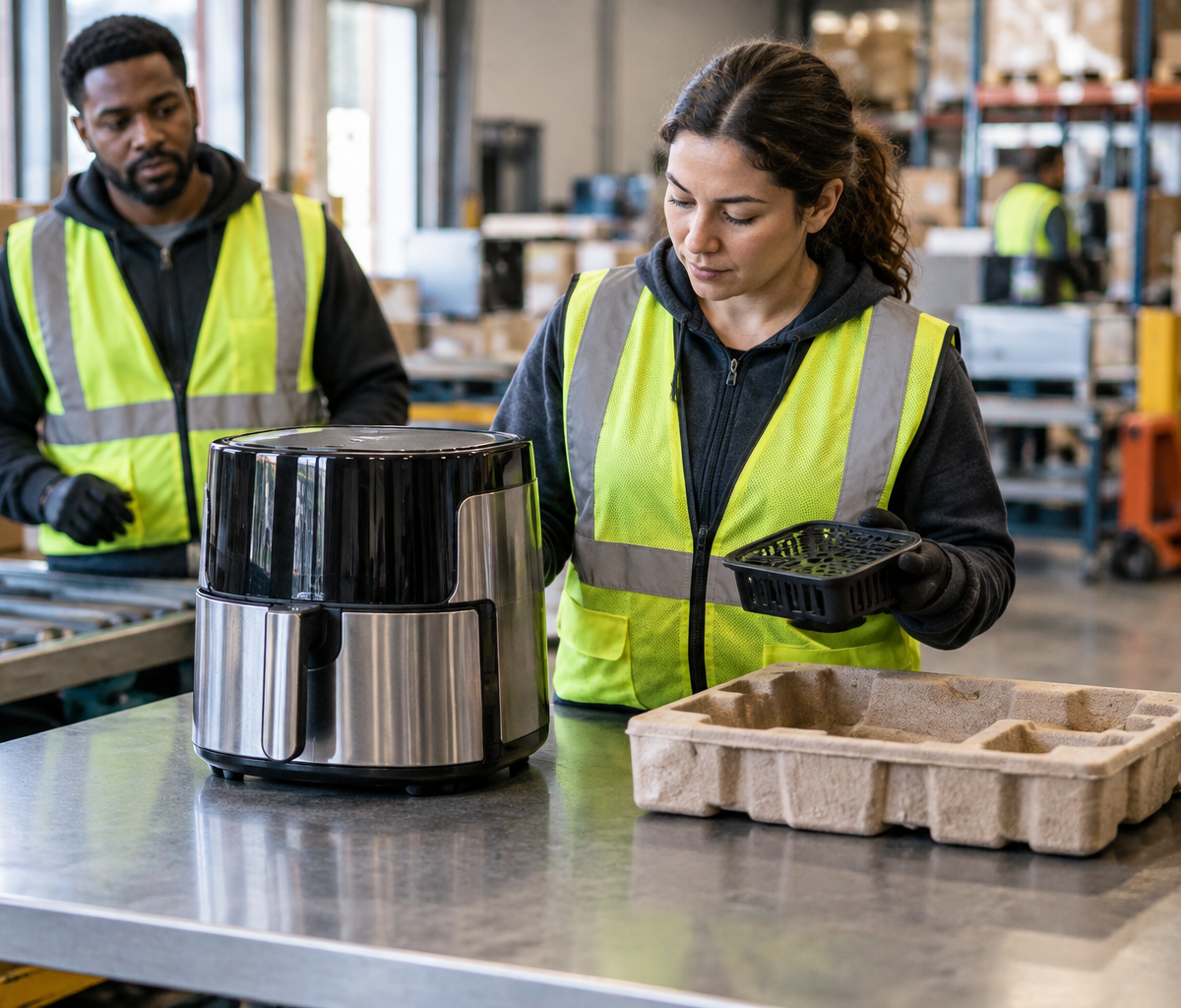
A customer returns a small appliance. The unit looks intact, but the power adapter listed with the original product is missing. Someone must match the return to its record, describe what physically arrived, and apply the employer’s authorized grading path. Returns processing as a logistics career may suit someone who enjoys that careful post-sale assessment and can leave an accurate record for the next team.
Returns work begins after a product has moved toward or reached a customer. The processor’s immediate task is not to decide whether a customer was entitled to return it in the first place. Nor does the processor write the company-wide rules for resale, repair, vendor return, or disposal. They inspect the actual returned goods and use the rules and system access assigned to their role. The job title may cover a wider range of tasks at a particular employer, so ask for the real daily workflow.
Match the return identity to the received goods
A return identity connects the physical package with the expected return record. Depending on the employer’s system, the worker may use an order number, return reference, item code, serial number, or label. The goal is to know which customer transaction and product the physical unit belongs to before grading it. A cardboard box alone is not reliable proof of its contents.
In the appliance example, the processor checks the reference on the package and compares the item inside with the record. The box might show the right model while the unit inside is a different color or revision. The processor should document that difference under the site’s procedure rather than force the item into the expected record. Ask how the employer handles a return with no readable reference or a mismatch between the label and the item.
Some returns arrive as single parcels; others are consolidated into a container from a store or carrier. The candidate should ask whether the role opens individual packages, processes batches, or both. That affects how items are kept associated with the right return case. A loose accessory on a shared table could easily be attributed to the wrong appliance unless the work area and record process keep them separated.
IBM’s reverse-logistics documentation describes return-order information, inspection of returned items, and determination of how those items are handled within its software workflow. It is an example of one product, not a rule every employer follows. It shows why a return processor may need to connect a physical item with a digital case before deciding what action is available.
Ask what the worker does when the return record says one item is expected but several items arrive. Is each unit scanned or recorded separately? Who resolves an unidentified item? A candidate who enjoys tracing identity and keeping cases distinct may like this part of the job. Someone who wants a fast, uniform flow may find mixed returns more frustrating than outbound orders.
Inspect actual item condition
Item condition is the state of the product as received, described under the employer’s criteria. The processor may check exterior wear, seals, completeness, function, or visible damage, depending on the product and authorized tests. “Looks fine” is too vague when a later team must decide whether the item can be resold or needs another path.
The appliance can appear undamaged while missing its adapter. The processor should separate those observations: the housing is intact, the named accessory is absent, and any functional test may be unavailable or outside the role’s authority. They should not record the product as fully complete because the main unit looks clean. They also should not claim it is defective simply because an accessory is missing.
Ask how the facility trains workers on product components and accessories. Is there a checklist, product record, image, or reference unit? What happens when a manufacturer changes what comes in the box? An inspector needs a current standard to avoid grading a complete return as incomplete, or overlooking a missing part that the next buyer would expect.
Some items require special handling because of batteries, liquids, sharp edges, hygiene rules, or other product-specific conditions. The employer should supply appropriate instructions. A processor should report a leaking, damaged, or unsafe item using the site’s procedure rather than perform an unfamiliar test. The candidate should ask which categories they will handle and what training applies to them.
O*NET’s stocker and order-filler profile includes inspecting stock items for wear or defects and reporting damage. That broad occupation does not define a dedicated returns job. It supports the idea that condition inspection and records can be part of warehouse work, while the details of returned-goods grading come from the employer.
Apply an authorized grading path
A grading path translates observed condition into the next status allowed by the employer. Labels might distinguish complete, incomplete, damaged, needing test, or needing review, but the actual categories differ. The processor should select only a status supported by the evidence and their authority. If the missing adapter makes the appliance a borderline case, the correct path may be escalation rather than a confident grade.
In the hypothetical example, the worker records an intact main unit and a missing accessory. Their system might direct that case to accessory matching, technical test, refurbishment review, or a hold. It would be unsound to prescribe a universal “resell” or “scrap” decision. Different products and companies have different policies, and the processor may not be the person authorized to make the final disposition.
Ask whether the role assigns a preliminary grade or a final one. Can the worker change inventory status? Who approves an exception? Does a separate team assess value or repair cost? These questions show how much judgment the job involves. A candidate seeking hands-on assessment may prefer a role with clear grading responsibility; someone who wants broader policy authority should look beyond the processing station.
Grading can have a physical side. Goods placed in the wrong area may be treated as ready stock even when the system says “hold,” or disappear into a mixed pile while awaiting review. Ask how the site marks and separates statuses. A reliable job process keeps the physical appliance, its missing-accessory note, and its digital status together.
A processor may find an item that matches the return record but has an unexpected condition. They should preserve that observation without assuming customer intent. “Adapter absent on arrival” is a reportable fact; “customer kept the adapter” is a conclusion the worker may not be able to prove. This discipline makes the record fairer and more useful.
Leave a condition record for the next decision
A condition record should tell another worker what was received, what was checked, and what remains unresolved. The system may allow photos, notes, checkboxes, or test results. A short, specific note often does more work than a broad “damaged” label. For the appliance, record the model and return case, the visible condition, and the missing adapter under the employer’s required fields.
Ask whether workers photograph each item or only exceptions. If photos are used, what should be shown, and how are images attached to the right case? The candidate should not assume photography is always required. The important point is that the next person can distinguish the main unit from its missing component and see the evidence behind the grade.
Records matter when a shift changes. The worker who receives the appliance may not be the person who sources an accessory or makes the final disposition decision. A clear handoff states where the physical item is held and what action remains open. Without that, the next team may repeat the inspection or make a decision from an incomplete note.
Some returns have no fault at all; others have several independent issues. A processor should avoid compressing them into one vague status if the system permits detail. If an item is scratched and missing a part, the later decision may depend on both facts. Ask how the employer records multiple conditions and how a worker corrects an entry if a later check finds a mistake.
Compare returns with outbound fulfillment
Outbound picking and packing usually start from known order instructions and goods expected to be available. Returns work starts with whatever actually arrives. The package may be incomplete, mislabeled, used, damaged, or different from the expected item. That uncertainty is part of the job. A person who enjoys careful judgment may prefer it to a more repetitive outbound sequence.
A quality inspector checks goods before release under current specifications. A returns processor assesses goods after sale or attempted delivery and records a path back into inventory, repair, or another controlled status. Both use observation, but their reference points and next decisions differ. Ask whether the advertised role is mainly receiving returns, testing products, customer-service administration, or a mix.
Returns processing may also involve repetitive lifting, opening cartons, sorting packaging, and working with items in unpredictable condition. Ask about the product mix, typical weights, workbench setup, protective equipment, and how unsafe items are isolated. The job may be physically different from the tidy desk-based returns workflow a candidate imagines from an online form.
Speed measures should reflect the mix. A sealed item with all accessories may be quicker to process than an unlabeled appliance missing parts. Ask how exceptions affect expected throughput and whether a worker can hold a case for review without being pushed to choose an unsupported grade. Good records take time, but they prevent later teams from repeating uncertain work.
Delpack’s transferable skills for a delivery driver resume guide can help a candidate describe actual returns experience when changing logistics roles. A processor can cite accurate identity matching, condition records, and exception handoffs if those were their duties. They should not claim authority over company return policy from a station-level grading task.
Ask who owns the next disposition
The next disposition is what happens to the item after its condition has been recorded under the company’s rules. Possible paths may include restock, test, repair, vendor return, hold, or a controlled disposal process. Which options exist and who chooses them depend on the product and employer. The processor should know how their assessment feeds that next decision.
In the appliance example, the missing adapter could lead to a hold while a matching accessory is found or to a separate review. The processor’s job is to make the incompleteness visible and use the authorized route. They do not need to redesign the company’s entire resale policy to do valuable work. Ask whether workers receive feedback when a grade is changed or a case returns for more information.
If the employer asks processors to make final disposition choices, request an example of the criteria and approval limits. Can a worker release a product for resale? Can they send it to repair? Who decides when a product must be removed from circulation? A clear answer helps the candidate judge the level of responsibility and whether training matches it.
IBM’s product workflow distinguishes return information, inspection, and subsequent handling. It is a useful illustration of staged decisions. At a real site, the sequence may differ, but the candidate should still be able to learn where their task ends and which team receives the item next. That boundary is central to choosing the role.
Decide whether post-sale assessment fits you
Before accepting, ask which products you will handle, how returns are matched to records, how completeness and condition are checked, what grades you may assign, and where uncertain items go. Confirm physical demands, expected pace, system training, and whether the role includes customer communication or only warehouse processing.
Returns processing as a logistics career may suit someone who can look at an intact appliance with a missing adapter and report both facts without jumping to a policy conclusion. The work involves repeated comparisons between an expected return and a physical item, followed by a clear handoff for its next authorized step.
Delpack’s Fort Wayne driver careers page describes driver opportunities, not a returns-processing opening. Compare actual postings for pay, schedule, training, physical conditions, and daily tasks. If you like deciding what a returned item actually is and documenting its condition, a returns role may offer the kind of judgment you want.
Continue with Delpack
Review the Fort Wayne career overview or contact Delpack with a question about the company.